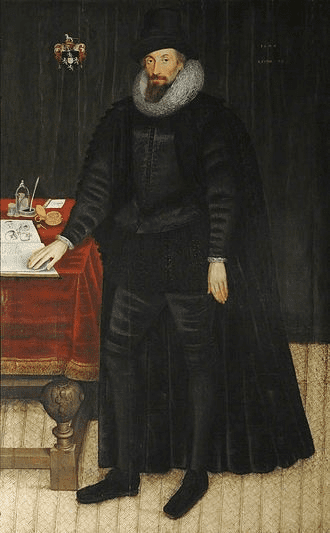

Medicine in London, as in many other European countries, was poorly developed for a long time. Most doctors of the Middle Ages had very different ideas about diseases than their modern colleagues. False theories concerning the origin of diseases and the absence of normal conditions for performing medical operations often led to the death of patients. Thus, during the war, wounded soldiers preferred to die on the battlefield than to go to the hospital and receive medical assistance. However, doctors existed in any period of history and some of them even became famous all over the world. William Paddy was one of them. Considering his life story, we can get a better understanding of what the professional activity and life of doctors were like in the 16th century. Learn more at Ilondon.
Childhood and education
William Paddy was born in London in 1554. Very little is known about the origin of his family and his childhood. A more interesting stage in William’s life was his entry into the Merchant Taylors’ School in 1569. It not only contributed to the boy’s knowledge but also was the first step towards his professional activity. After all, in that period, William’s passion for medicine began to form, which later made him a royal physician. Then William Paddy entered St. John’s College and received his B.A. in the summer of 1573. In 1589, he graduated M.D. in Leyden. This fact indicates that William often travelled to European countries during his studies. In 1591, he received the M.D. in his country, in Oxford. Thus, his fate brought him to London again. After successfully passing the examination at the College of Physicians of London in 1589, he was awarded the title of licentiate. In 1595, William Paddy became censor of the college and then was re-elected, holding the post from 1597 to 1600. He also became president of the college four times.
Further life and professional activity

A turning point in William’s life was his appointment to the position of physician to James I. The king not only wanted to see this particular person in his entourage but also solemnly knighted William Paddy in 1603. In the same year, the doctor wrote his well-known copy of poetry in Latin. Its main idea and the inner state of the author were reflected in the words “Terminus huc rerum meus huc me terminus urget” (the limit of my thoughts is here, the limit of my everything is here). In this work, William mourned the death of Queen Elizabeth. In general, William Paddy studied many topics from various fields of science and most likely wrote many other works, but this copy was the only one published. During his professional activity, the royal physician also researched tobacco and its harmful influence on human health. In addition, William Paddy demonstrated his rather good diplomatic qualities. For example, in 1614 he defended the reputation of the College of Physicians of London considering the issue of arms-bearing. He relied on the Physicians Act 1540. The result was very good and the recorder decided to satisfy the college’s claim. Having shown his talent, William established a friendship with Sir Theodore Mayerne. Probably, he managed to prove his stance because he had already had considerable political experience being a member of Parliament from 1604 to 1611. Another significant event in the doctor’s life was the death of King James I in 1625. For a long time, the king suffered from an illness, complicating his gout. William Paddy was also old at that time but continued contributing to society until his death in December 1634.