
London is home to countless landmarks that chart the city’s evolution across various spheres. Its oldest hospitals map the progress of medicine, monuments stand as testaments to historic events, and grand palaces offer a glimpse into the aristocratic life of bygone eras. Yet, some of the city’s most significant historical and artistic heritage is entirely intangible. Music is a prime example, with London’s choral culture, in particular, achieving remarkable heights. But what role have choirs played throughout the capital’s history, and what sets the local choral scene apart? Read more on ilondon.
The Origins and Evolution of Choral Traditions
The evolution of choral music across the UK has always been closely tied to shifting social landscapes. For instance, the tradition was long dominated by male-only ensembles, reflecting historical gender disparities. This didn’t begin to change significantly until 1991, when Salisbury Cathedral made history by establishing the country’s first-ever girls’ choir. However, the most profound influence on choral singing has always been religion. The earliest choirs emerged during the Middle Ages, with performances deeply rooted in monastic settings. Today, the art form remains intimately intertwined with its spiritual origins, continuing to resonate through the naves of chapels, churches, and cathedrals.
Broadly speaking, Britain’s choral heritage spurred the founding of numerous cathedrals and colleges. It also paved the way for a vibrant network of amateur choirs and the establishment of centuries-old traditions. Furthermore, the flourishing of this art form inspired a rich culture of music festivals nationwide. The repertoire itself became a cultural melting pot, weaving together the dramatic flair of the German Baroque, the intricate polyphony of the Italian Renaissance, the grandeur of the Austrian Enlightenment, and the distinct musical identity of England itself.
Professionalism and Musical Diversity
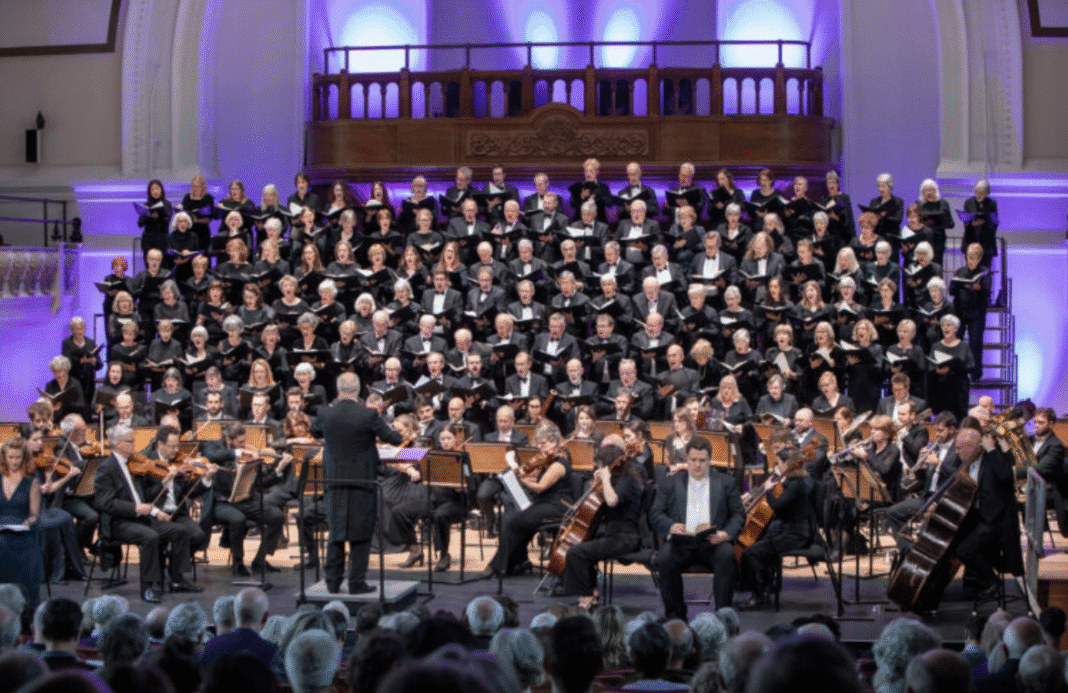
A true jewel in London’s musical crown is the London Philharmonic Choir (LPC). Its story offers a fascinating snapshot of how the city’s choral culture has developed over a relatively short but vibrant period. Operating as an independent charity, the choir has cemented its status as a cultural icon in the British capital. The ensemble was founded in 1946, a time when a war-weary London was desperate to reconnect with beauty and the arts. Their debut performance was deeply poignant for the era. Taking to the stage at the Royal Albert Hall in May 1947, they performed Beethoven’s Ninth Symphony—a masterpiece famously driven by themes of triumph and finding hope in the darkest of times.
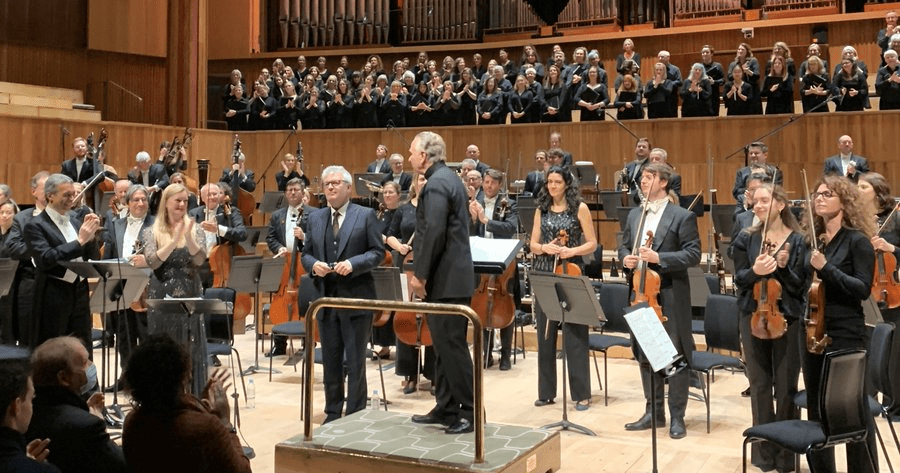
Over the decades, a succession of visionary chorus masters has shaped the choir’s evolution, each bringing fresh ideas to the podium. Notably, its second chorus master, John Alldis, pushed for higher performance standards and boldly championed contemporary repertoire. By 1979, the London Philharmonic Choir had embarked on its first overseas tour. The momentum continued under Richard Cooke, who took the helm in 1982, leading successful tours to Italy and France. Later, Neville Creed stepped in to revitalise the ensemble, boosting morale and artistic vigour following a challenging period in the early 1990s.
Today, the London Philharmonic Choir thrives on the diversity of its 200-strong membership, drawing singers of all ages and professional backgrounds. Great attention is paid to professional performance; prospective members must pass a rigorous audition, and current singers are re-auditioned every few years to ensure peak vocal quality. At its heart, the LPC aims to deliver world-class performances of major choral works while fostering a warm, highly sociable community off-stage. While deeply anchored in rich British choral traditions, the choir continues to tackle an incredibly diverse and expansive repertoire spanning multiple styles.