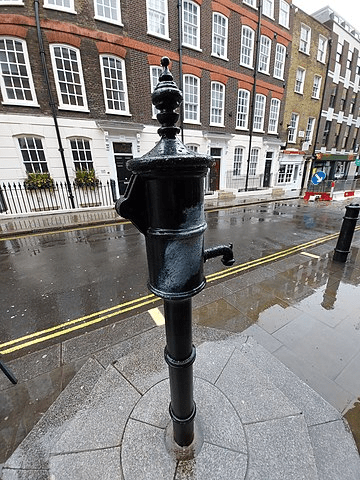

London has always been one of the most developed cities not only in Europe but in the whole world. The capital of Great Britain is associated with many inventions, breakthroughs in various fields of science, incredible architectural objects, unique enterprises, as well as the development of the cultural, educational and economic spheres. However, at a certain period of history, the number of people arriving in the city overtook some development processes. Overpopulation, unsanitary conditions, poor sewerage and outdated medicine caused the emergence of such terrible diseases as typhoid and scarlet fever. However, the most large-scale and frightening for Londoners were the cholera epidemics. They were distinguished by their “nasty” character. They seemed to intensify all the chaos that arose in the city. Horrible smells of waste permeated the air, while people suffered from horrible illnesses. Learn more at Ilondon.
The epidemic that made the problems of sanitation urgent in London
In general, cholera engulfed the world in 1830-1860. At that period, outbreaks of the disease claimed thousands of lives in different parts of the globe. One of the most known waves of cholera in London is the one that happened in 1831. People were infected at a crazy speed, the doctors weren’t familiar with the new disease and, of course, they had neither thorough knowledge about the correct treatment nor special medications. Cholera almost immediately caused a host of symptoms, such as vomiting, diarrhoea, dehydration, irregular heartbeat, inflamed eyes and dry, bluish skin. Panic, fear and the unknown mixed together with the appalling unsanitary conditions on the city streets, which were the main cause of such diseases. The first outbreak of cholera in 1831 was followed by epidemics of influenza and typhoid fever, prompting the government to investigate sanitation. Moreover, cholera didn’t disappear after the first wave. It arose again and again (especially in the warm seasons of the year). In 1842, the English lawyer Edwin Chadwick in his Report on the Sanitary Condition of the Labouring Population of Great Britain showed a direct relationship between unsanitary conditions and the emergence of diseases. One of the main reasons for the accumulation of waste, stench and the spread of infections was the lack of a sewage system. The situation was also complicated by the banks of the river. In the summer, the Thames turned into an accumulation spot of all possible garbage and waste.
Further outbreaks of the disease in some city areas
Over time, the cholera seemed to recede. Although there were sudden outbreaks in London from time to time, they no longer took such a large number of lives and didn’t spread throughout the country. It seemed that the disease was hiding in the stinking river and waiting for an opportune moment to enjoy the chaos it was creating. The Soho cholera epidemic of 1854 was one of such cases. The source of the disease was contaminated water rather than particles in the air (as most scientists and doctors of the time believed). Then cholera took the lives of 616 people.
How did the city manage to overcome the problem?
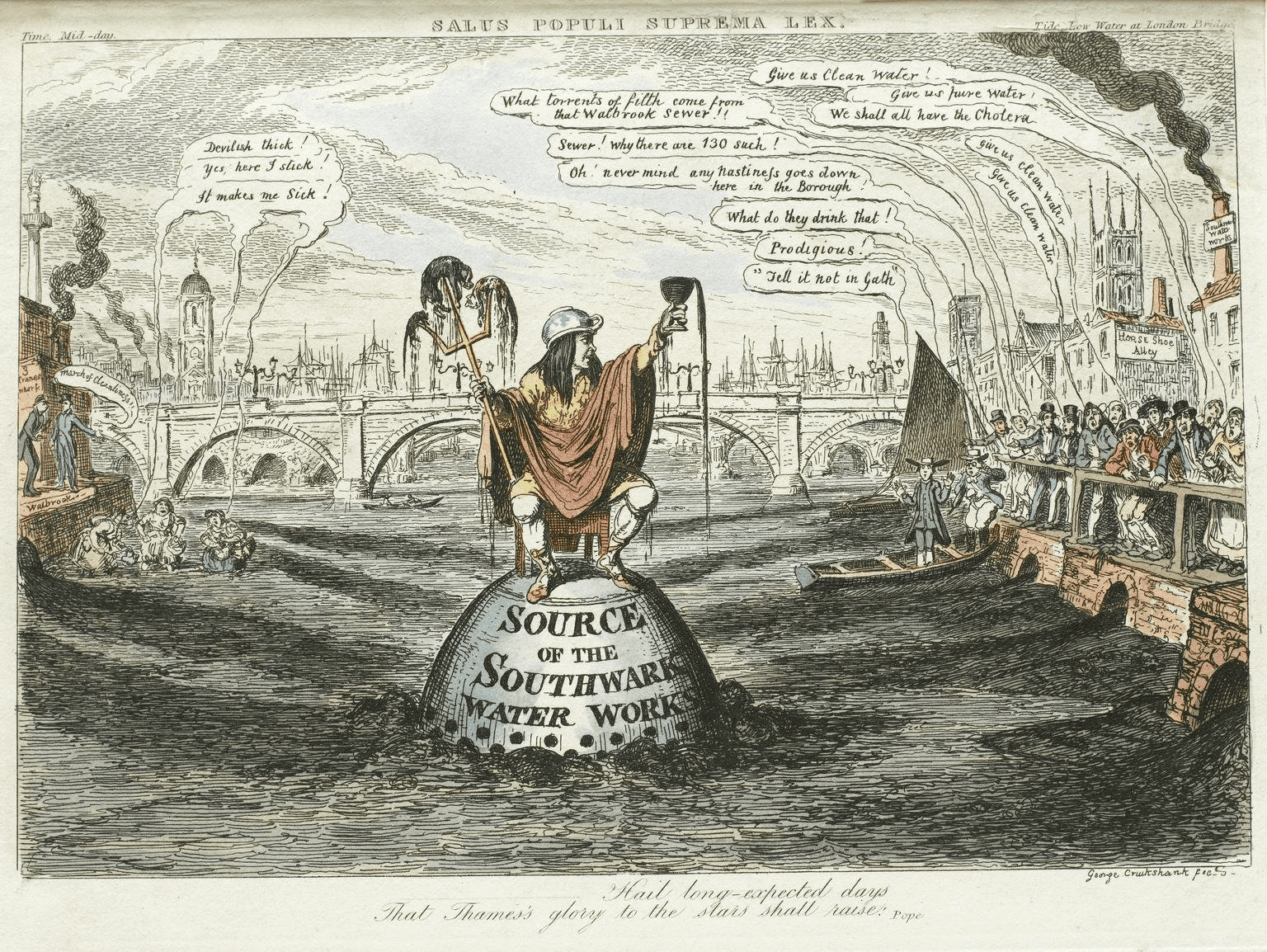
Photo source: Science Museum Group Collection
The situation improved significantly after a number of studies were carried out. People began to understand the importance of cleanliness, doctors have already abandoned the idea that all diseases are caused by poor air quality and the government has realised the need to build effective sewerage. Having eliminated all the problems, it was finally possible to improve public health not only in London but also in the whole country.