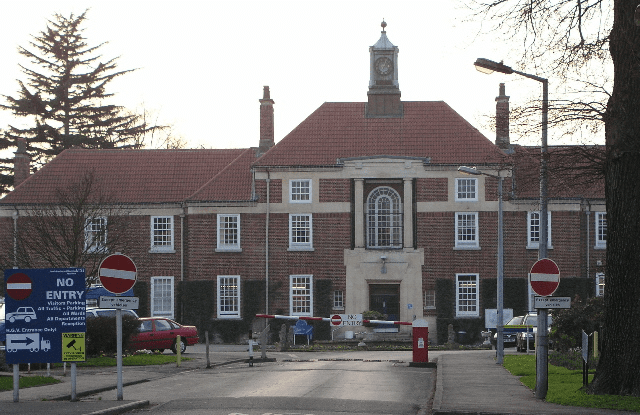

People faced the problem of the emergence, spread and treatment of mental illnesses at different times. Some phenomena related to this field of medicine still remain a mystery. However, the research of modern scientists and doctors is difficult to compare with the medical knowledge that existed hundreds of years ago. The history of European medicine impresses with its theories and methods of treatment. Probably, everyone knows about the terrifying instruments of dentists, frequent deaths during childbirth, terrible unsanitary conditions and many other unpleasant realities of the Middle Ages. However, one of the cruellest ones was the treatment of people with mental illnesses. Those methods are difficult to describe in ordinary words. The history of one of the oldest hospitals in London, Bethlem Royal Hospital, can reveal some of the secrets of this sphere of medicine. What happened within its walls several centuries ago and what secrets were uncovered? Learn more at Ilondon.
The creation of the hospital
The history of the hospital dates back to 1247. Then it was built as the Priory of the New Order of our Lady of Bethlehem in London. Initially, the hospital was located immediately behind the London Wall (not far from the modern Liverpool Street Station). After that, its locations and buildings changed several times (within the limits of modern London). Interestingly, the hospital wasn’t intended for receiving and treating patients. Its primary purpose was to raise funds for the support of the Crusader Church. In general, at that time, religion had a huge influence on society. The church provided help to all in need. However, the financial situation of the Crusader Church deteriorated significantly after the conquest of Bethlehem by the Khwarazmian Turks in 1244. At the same time, the number of needy people didn’t decrease. Thus, the hospital served as a place for collecting alms, holding charitable activities and giving people psychological, financial or medical assistance.
When did the institution become a hospital for people with mental disorders?
Bethlem Royal Hospital is known all over the world as a clinic for mentally ill people. However, such patients began to be treated there only in 1377. We learned about this from a monograph on the history of the institution, which was written by the hospital chaplain in 1914. Still, the exact date when the hospital began to care for people with mental disorders is unknown. There is a theory that the institution started this activity a little later in 1403. Such information was noted in the details of the visit of the London charity commissioners. This source was also the first to mention the terrible conditions in which the patients were kept there. Iron chains, shackles and other frightening accessories were found on the premises. Most likely, they were used for people who were considered too dangerous. Thus, a small hospital, established for the conduct of charitable work, was gradually turning into a specialised mental asylum. Beginning in the 14th century, the hospital was also informally referred to as Bedleem or Bedlam. Later (especially during the development of theatrical activity in England), these words acquired a meaning of chaos, madness and the irrational nature of the world.
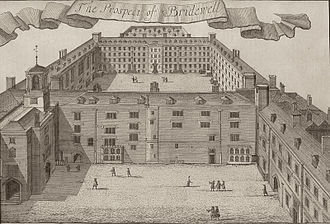
Photo source: An Accurate Edition of Stow’s “A Survey of London”
Conditions in the asylum
In general, there is little information about local treatment methods and conditions during the Middle Ages. Its history reveals only a few references that raise even more questions. During the 16th and 17th centuries, patients were allowed to move around the building freely. However, there were strict methods of restraining patients whose diseases were strongly developed. Too anxious patients were chained and isolated from others. Some residents of the city, whose houses were located next to the hospital, mentioned constant shouting, crying and screaming. For a long time, the treatment process wasn’t distinguished by respect or care at all, but on the contrary, was similar to torture. Real terror and chaos reigned there until the middle of the 19th century. Almost all patients, except those who were considered incurable, underwent a similar system of treatment. One of the main procedures, which was supposed to cure all diseases, was cold bathing. Doctors of that time really believed it was extremely effective. However, it was probably not the most terrible thing that the patients saw and experienced in this place. Quite often, doctors resorted to bloodletting, laxatives, inducing vomiting, etc. Moreover, all these methods were applied in a chaotic order, which wouldn’t seem logical and consistent for a modern person. The ineffectiveness of such methods goes without saying. They didn’t help patients, but on the contrary, often had fatal consequences. Although medicine developed a lot in the 19th century, patients continued to be treated as experimental subjects in many mental hospitals (in particular, Bethlem Royal Hospital).
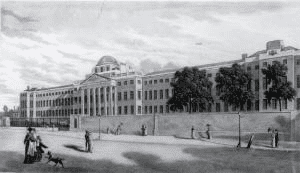
Photo source: Bethlem Museum of the Mind
The situation was also significantly complicated by the terrible unsanitary conditions. The hospital was located above a constantly overflowing waste pipe. Until 1657, all water supply was reduced to a single cistern in the backyard. In addition, the lack of centralised sewerage led to the accumulation of excrement. Sometimes, patients defenestrated it (quite often at the hospital staff). Moreover, there was a period in the history of the hospital when patients were prescribed a special diet, which involved a reduction in the amount of food. Therefore, many of them suffered from hunger. Chaos and lack of order reigned in the hospital until the beginning of the 19th century. Bethlem Royal Hospital underwent some changes when it was relocated to St George’s Fields. In the new building, the institution introduced a clear division of the departments to eliminate some troubles with the patients.
The hospital in the 21st century

Photo source: Britplus
It would seem all that medical horror remained far in the past. However, similar creepy situations have happened in the modern world. In 2010, a 23-year-old British man died in Bethlem Royal Hospital as a result of physical restraint by the police. Medical personnel and police officers didn’t even react when the man became unresponsive. The only thing that distinguished this case from all the others that happened several centuries ago was that it gained wide publicity. At first, there were attempts to acquit the police, but the family of the deceased insisted on a new investigation. However, justice wasn’t achieved. Later, there were several more cases of “mysterious” deaths.

Photo source: Britplus
The modern hospital receives patients from all over Great Britain. Modern Bethlem Royal Hospital consists of many specialised departments, among which is occupational therapy. The local Bethlem Museum of the Mind offers exhibits describing the history of the hospital itself and the treatment of mental illness.