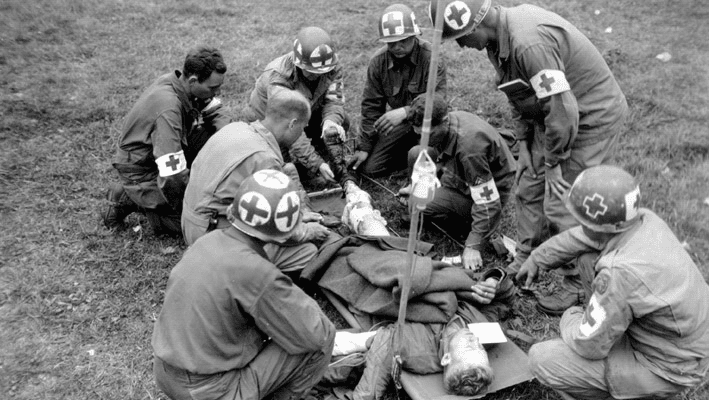

The Second World War has changed the life of every person. Different governments prepared residents in various ways. Many countries worked out clear algorithms of action to provide the population with the necessities and organise security. Great Britain was one of them. The residents understood the seriousness of the events that could happen in the near future, and therefore, were preparing and training in advance. In schools, children were informed of the rules and given instructions that must be followed in case of emergency situations. The military also underwent active training. Great attention was paid to medicine because the experience of the First World War revealed the treachery of the enemy and that they can use poisonous substances and gas. But were such medical preparations sufficient enough to provide quality care throughout the war? Learn more at ilondon.info.
Pending the War: First Steps in Medical Training
The London government began to prepare for the war in advance. The atmosphere was quite tense in Europe. The country was aware of its geographical location, and therefore, its advantages. But according to authorities’ calculations, even under favourable conditions, the city could face 100,000 tons of bombs. Medicine played one of the most important roles. Although Germany didn’t attack the city in the first days, the authorities continued to train the population. Experts also foresaw a high probability of gas attacks. Londoners should always have a gas mask nearby and immediately went to shelters when an air raid alert was announced. In addition, the evacuation of some part of the population from London to villages, small towns and suburban areas was taking place before and during the war as well.
The authorities began to calculate the number of beds in hospitals. They also inspected the functioning of medical institutions and whether they were provided with everything necessary. According to the plan, the city was divided into 10 separate districts. Visually, each such sector looked like a triangle with several medical facilities. The main hospital was located at the top of that imaginary triangle. It enabled quick assistance to victims of unexpected shelling. The clear actions of the city’s administration and doctors helped to avoid a large number of casualties. However, tensions and difficult situations in the medical sphere continued until the end of the war.
Doctors’ professionalism and post-war changes in medicine
During the Second World War, the city and its population suffered from aerial attacks. Therefore, the first priority was the organisation of emergency medical assistance. Such centres were created on the premises of mental hospitals and many other London public institutions. 2,000 beds at Horton Hospital, 746 at Friern, 650 at Leavesden, 548 at Banstead and other city facilities were converted to emergency care units. Both military personnel wounded in battle (usually pilots) and injured civilians were treated there. Women played an important role during the war as well. They performed not only their usual work, which became more difficult under such conditions but also took on more difficult men’s work. Women filled the ranks of the military and often drove vehicles, including medical ones. The story of 16-year-old Ennis Smith, who became the youngest ambulance driver, is particularly interesting.
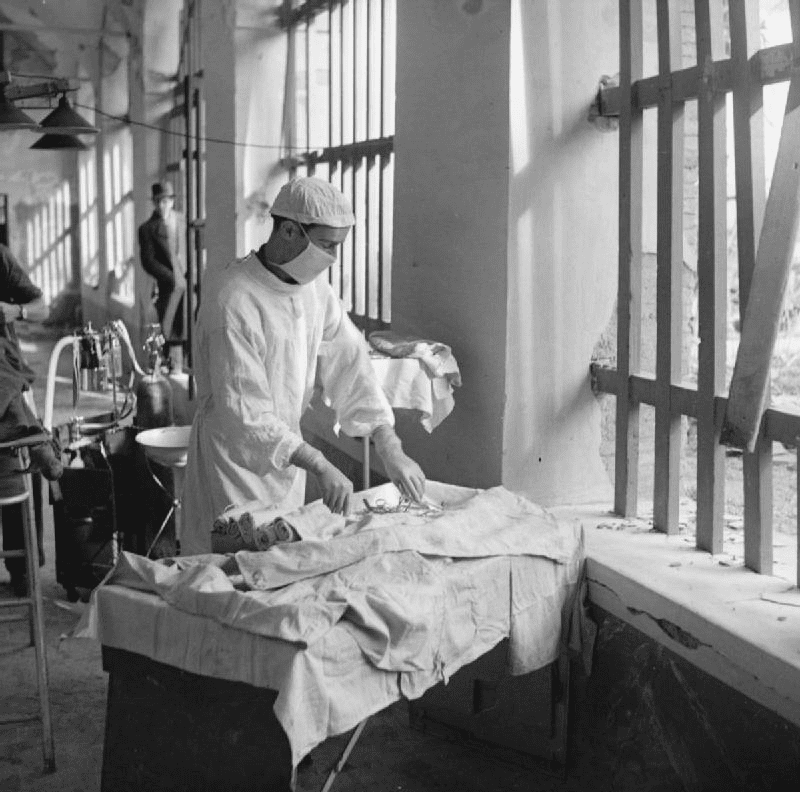
Certain changes were established in the medical sphere after the war. The authority introduced a number of new laws. One of them involved the provision of medical care to all who needed it, which contradicted some of the principles and rules that existed before the war. London doctors took an active part in the development of prostheses. Ironically, the war became an impetus to the development of medicine and introduced new methods, technologies and remedies.