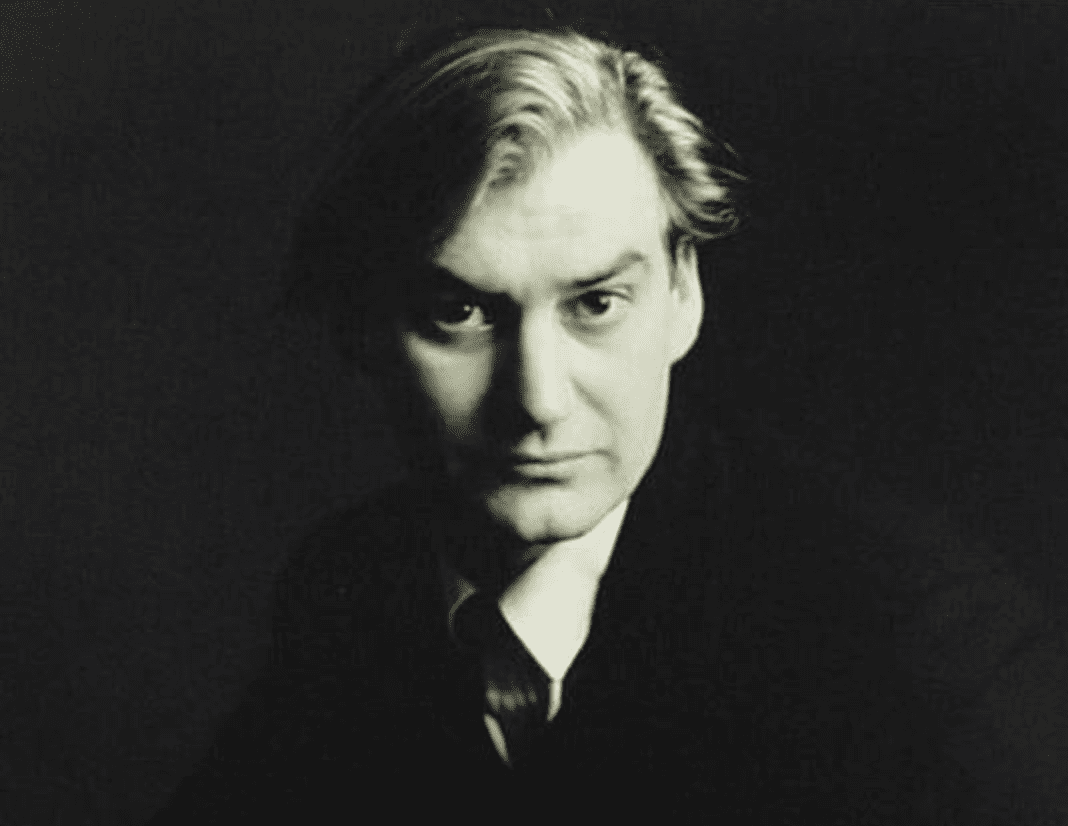

In the mid-20th century, promoting contemporary avant-garde art faced stiff resistance in countries only just beginning to open up to international influences. James Birch — art dealer, curator, and publisher — succeeded in building a cultural bridge between the West and the Soviet Union. By championing both classical and counter-cultural movements, he enabled new artistic ideas to reach even the most closed societies. More at ilondon.
Early Years and James Birch’s Artistic Path
James Birch was born in London in 1956. Growing up in a family of artists, he went on to study Art History at the Université de Provence Aix-Marseille. Later, he secured a position in the Old Masters department at Christie’s Fine Art in his home city, where he eventually established a department dedicated to 1950s rock and roll.
In 1983, Birch opened his first gallery, James Birch Fine Art. Pushing the boundaries of traditional art, he turned it into a platform for British Surrealists. The curator specialised in exhibitions of artists such as John Banting, Eileen Agar, Conroy Maddox, and Grace Pailthorpe. Under his guidance, their avant-garde work gained fresh recognition and attracted a broad audience.
In 1986, Birch planned to organise an exhibition of British Neo-Naturists in Moscow, but the Soviet authorities rejected the idea. Despite ideological constraints, they expressed interest in showcasing the Western avant-garde. Instead, through KGB officer Sergei Klokov, the curator was invited to organise a Francis Bacon exhibition in 1988. Intrigued by the chance to see Rembrandt’s work at the Hermitage, Bacon agreed. Though the process was fraught with bureaucracy, censorship, and cultural clashes, it became the first exhibition by a British artist in the USSR since 1917.
Following this success, Birch continued to lead international art projects. In 1990, he focused on a Gilbert & George exhibition in Moscow, followed by another in Beijing in 1993. Impressed by these ventures, broadcaster and writer Daniel Farson wrote “The Gilded Gutter Life of Francis Bacon” and “Gilbert & George in Moscow.” These works cemented Birch’s reputation for popularising British art in countries that were only beginning to embrace Western culture.
Returning to the UK exhibition scene, Birch founded the A22 Gallery in London, where he showcased works by Keith Coventry, Dick Jewell, and Genesis Breyer P-Orridge. A highlight of his work there included two exhibitions dedicated to members of The Colony Room — the legendary London club that served as a hub for the cultural bohemian set.
In 2017, Birch collaborated with Barry Miles on the book and exhibition “The British Underground Press of the Sixties” at his A22 Gallery. In 2021, he published “Bacon in Moscow.” Sharing his memories of organising the landmark Francis Bacon exhibition, the book received critical acclaim from The Times, The Guardian, The Art Newspaper, and The Spectator.
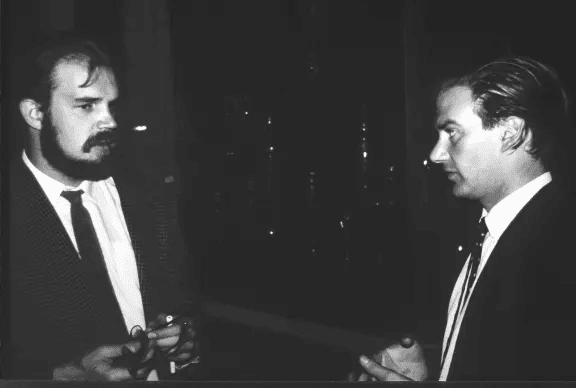
RNZ
Sergei Klokov and James Birch at the Kremlin
Recognition and Impact of James Birch’s Work as an Art Dealer
James Birch made a significant contribution to the promotion of Western avant-garde art. Beyond those already mentioned, he gave a platform to Grayson Perry, Austin Osman Spare, Denis Wirth-Miller, and many others. His notable exhibitions include “Christine Keeler: My Life in Pictures”; “Modern Couples: Art, Intimacy and the Avant-garde” at the Barbican Art Gallery; and “Denis Wirth-Miller: Landscapes and Beasts.” His projects have spanned the UK, South Africa, Australia, and New Zealand.
The Week