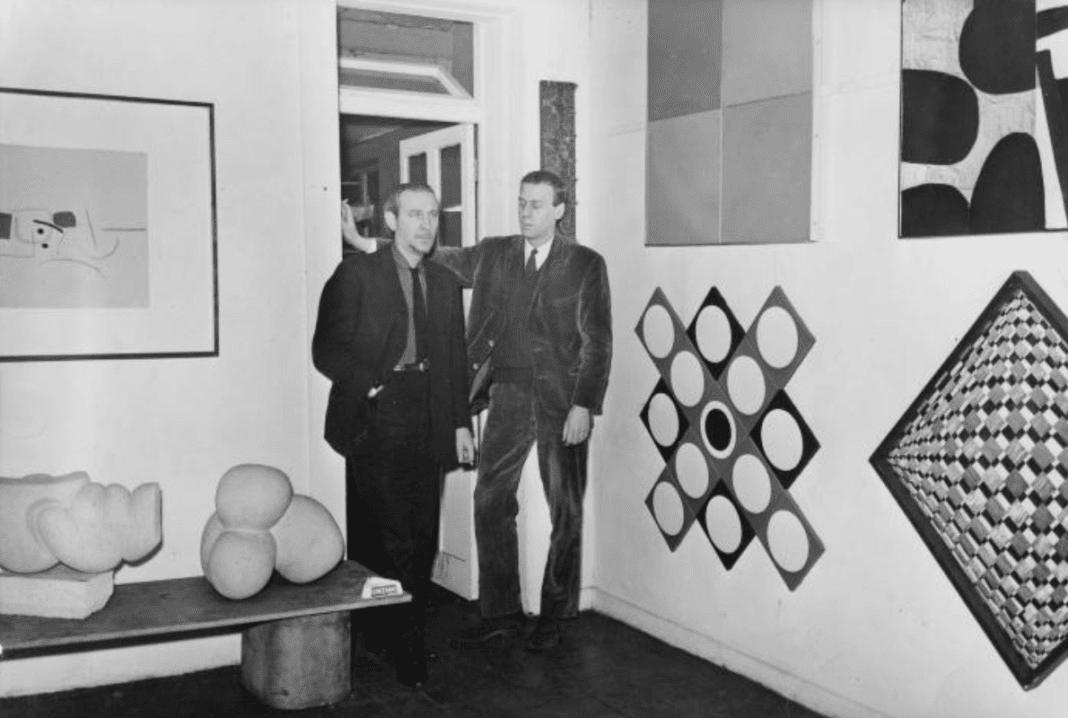

Following World War II, new non-figurative art was met with suspicion or outright hostility by British critics. The New Vision Centre Gallery successfully acted as a catalyst for changing the perception of avant-gardism and abstraction in the country. It became a crucial platform for pioneering experiments, free expression, and showcasing artists overlooked by prevailing conservatism. Read more at ilondon.
History of the Founding and Development of the New Vision Centre
Driven by a desire to popularise abstract art, artist Denis Bowen began organising meetings, discussions, and exhibitions with his students. This activity led to the formation of the New Vision Group in London in 1951. Bowen focused on creating a space for unconventional artists. Over time, these regular events transformed into a platform for developing new creative approaches and sharing expertise.
In 1955, the New Vision Centre Gallery was opened through the joint efforts of Denis Bowen, Frank Avray Wilson, and Halima Nalecz. It focused squarely on supporting and promoting contemporary artists. Despite its active schedule, the exhibition space largely remained outside the mainstream public eye, as conservative British society was wary of the spread of abstract and avant-garde art. However, the organisers eventually enabled over 220 artists to showcase their work in more than 250 exhibitions.
The New Vision Centre Gallery became a pioneer in highlighting contemporary international artists. It distinguished itself through an open policy regarding the exhibition of creative works by artists from diverse racial and ethnic backgrounds. Its shows became a launchpad for Black and Asian painters, sculptors, and photographers. Given the prejudices and discrimination prevalent at the time, this inclusive approach was notably rare among British cultural institutions.
The New Vision Centre Gallery also made sure to represent the European avant-garde on the British scene. It became renowned as a platform for artists who were developing the early ideas of Tachism—a variety of abstract expressionism. Experimenting with figurative art, its representatives were known for their spontaneity, improvisation, and intuitive approach to creativity.
For instance, the New Vision Centre Gallery organised an exhibition of Italian conceptualists Enrico Castellani and Piero Manzoni in 1960. This attracted attention by revealing the material and spatial aspects of a unique artistic process during a period when their work was still emerging in the public sphere. In 1964, the exhibition space participated in highlighting the work of the German art group ‘Zero’—specifically Heinz Mack and Otto Piene. The group advocated for purity of form, the use of unconventional materials, and light effects. The collective generally aimed for a ‘zero point’—a new creative beginning following the trauma of World War II.
As the landscape of modern art shifted, Pop Art, Op Art, Minimalism, and Conceptualism began to compete with the ideas championed by the New Vision Centre Gallery. Although Great Britain was initially sceptical of non-figurative art, it gradually became more open to new movements. Ultimately, the exhibition space ceased operations in 1966.
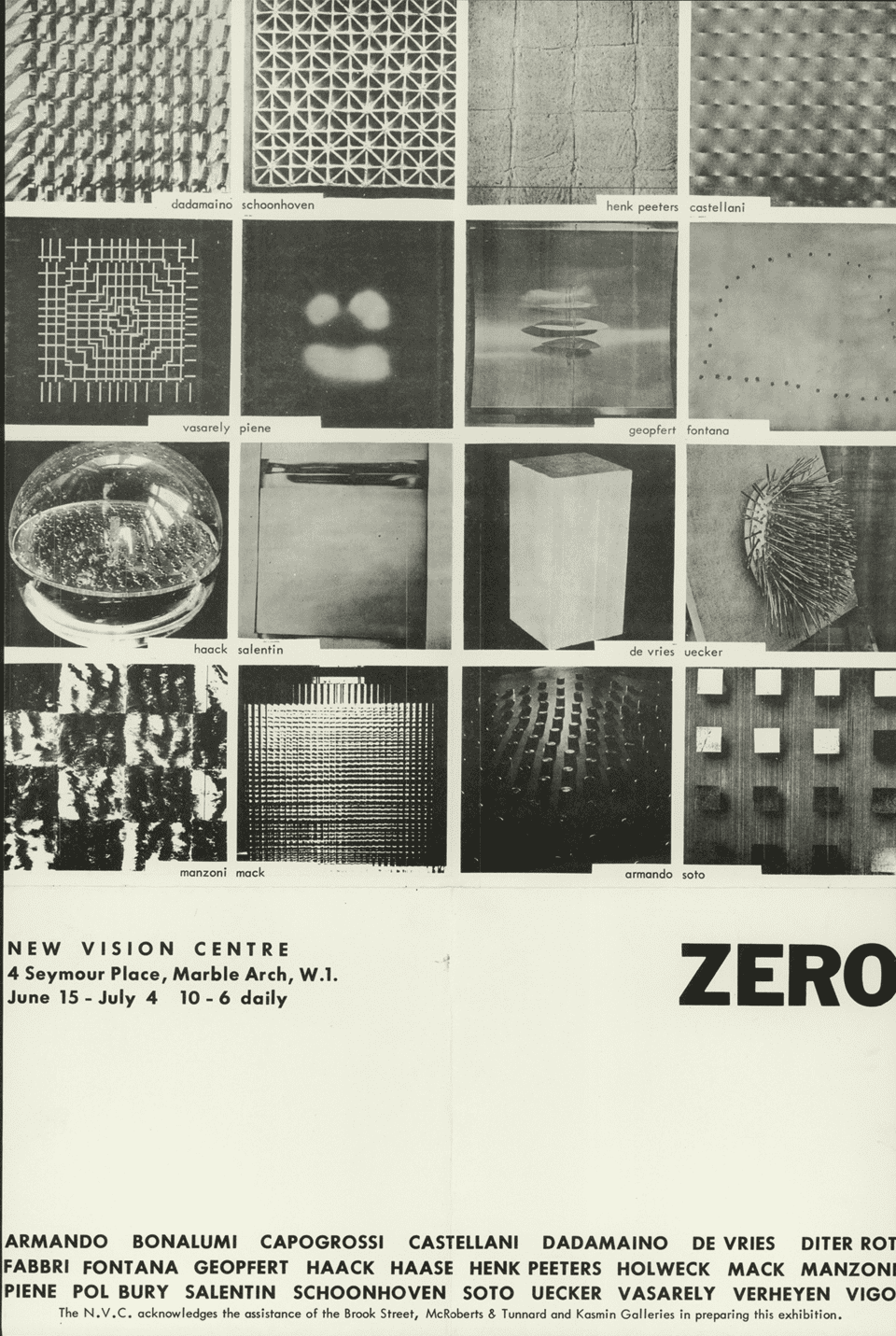
ZERO Foundation
Recognition and Significance of the New Vision Centre Gallery’s Work
Despite its short operating period, the New Vision Centre Gallery left a significant ideological legacy on the vibrant history of British culture. It featured exhibits from nearly 30 countries, including Great Britain, Canada, Italy, France, Germany, Holland, Australia, Sri Lanka, and New Zealand. This encompassed experimental artists such as Aubrey Williams, Judy Cassab, Ron Russell, Manuel Fernandez, and Bill Newcombe.
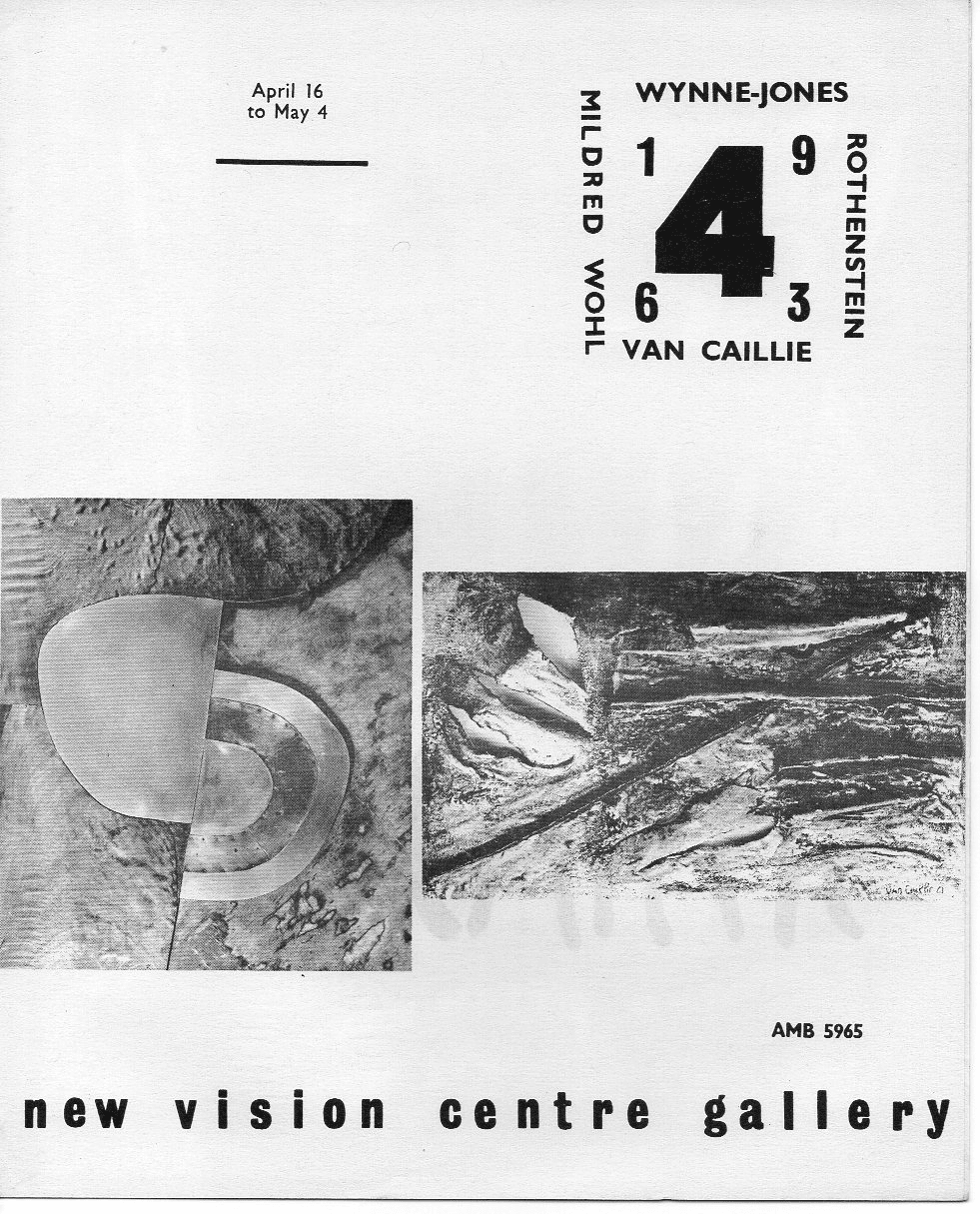
www.vancaillieartist.co.uk