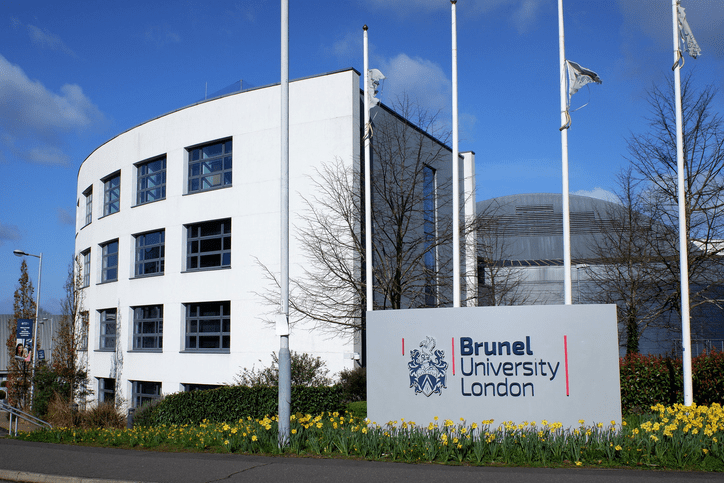

Brunel University London stands as one of the UK’s leading educational institutions, blending a rich engineering heritage with modern innovation. With a reputation as a progressive hub, the university makes significant strides in science, technology, and medicine. Read more at ilondon.
The History and Development of Brunel University
In 1957, Acton Technical College was split into two distinct entities. While the first continued to train technicians and craftsmen, the newly formed section took on the responsibility of shaping a new generation of chartered engineers. This latter group formed the foundation of Brunel College of Technology, named after the legendary British engineer and pioneer of the Industrial Revolution, Isambard Kingdom Brunel.
By 1960, Brunel College of Technology had earned the status of a College of Advanced Technology, officially renaming itself in 1962. A pivotal moment arrived in 1966 when the institution was granted a Royal Charter. This secured its university status and the power to award degrees, and from that point on, it became known as Brunel University.
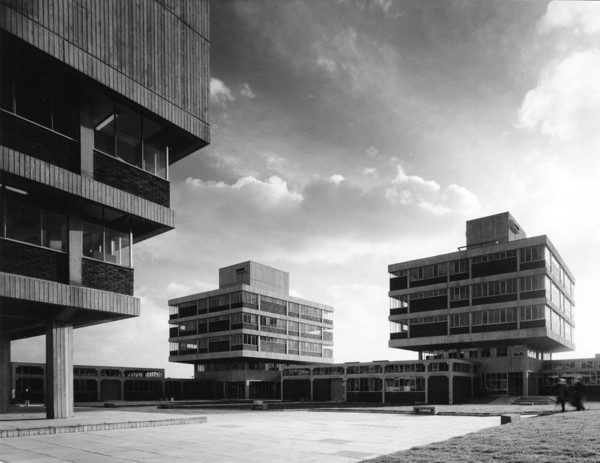
In the ensuing years, Brunel operated across two sites: Acton and Uxbridge. However, by 1971, the university had fully vacated the original Acton campus to centralise activities in its new facilities. A major milestone followed in 1980 with the merger of Shoreditch College of Education. This site became a second campus, broadening both the university’s educational scope and its geographical footprint.
Growth continued in 1995 as Brunel University absorbed the West London Institute of Higher Education. This integration added campuses in Osterley and Twickenham. While engineering, science, and technology remained traditional strongholds, the merger unlocked new disciplines. Arts, humanities, earth sciences, healthcare, and sports sciences were introduced, boosting the student body to over 12,000.
In 2014, the institution underwent significant internal reorganisation, officially changing its name to Brunel University London. Since then, its academic structure has been built around three key colleges: the College of Business, Arts and Social Sciences; the College of Engineering, Design and Physical Sciences; and the College of Health, Medicine and Life Sciences.
The year 2016 marked Brunel University London’s 50th anniversary since receiving its Royal Charter. To celebrate, a massive 14-month programme was launched, featuring over 40 events highlighting its achievements and contributions to science, education, and society. Bringing the public together, the university strengthened its ties with both the national and global community.

The Legacy and Impact of Brunel University
Brunel University has carved out a reputation as one of the UK’s most innovative education and research centres. It takes particular pride in its world-class research into robotics and autonomous systems. By leveraging cutting-edge technology, the institution optimises solutions for both industrial and societal challenges. Notable alumni include Shini Somara, Hannah Critchlow, Rosena Allin-Khan, Jenny Chapman, and Tiziana Terranova. The university actively collaborates with leading state and international scientific bodies, including the University of Oxford, the University of Bern, and the University of Rome Tor Vergata.