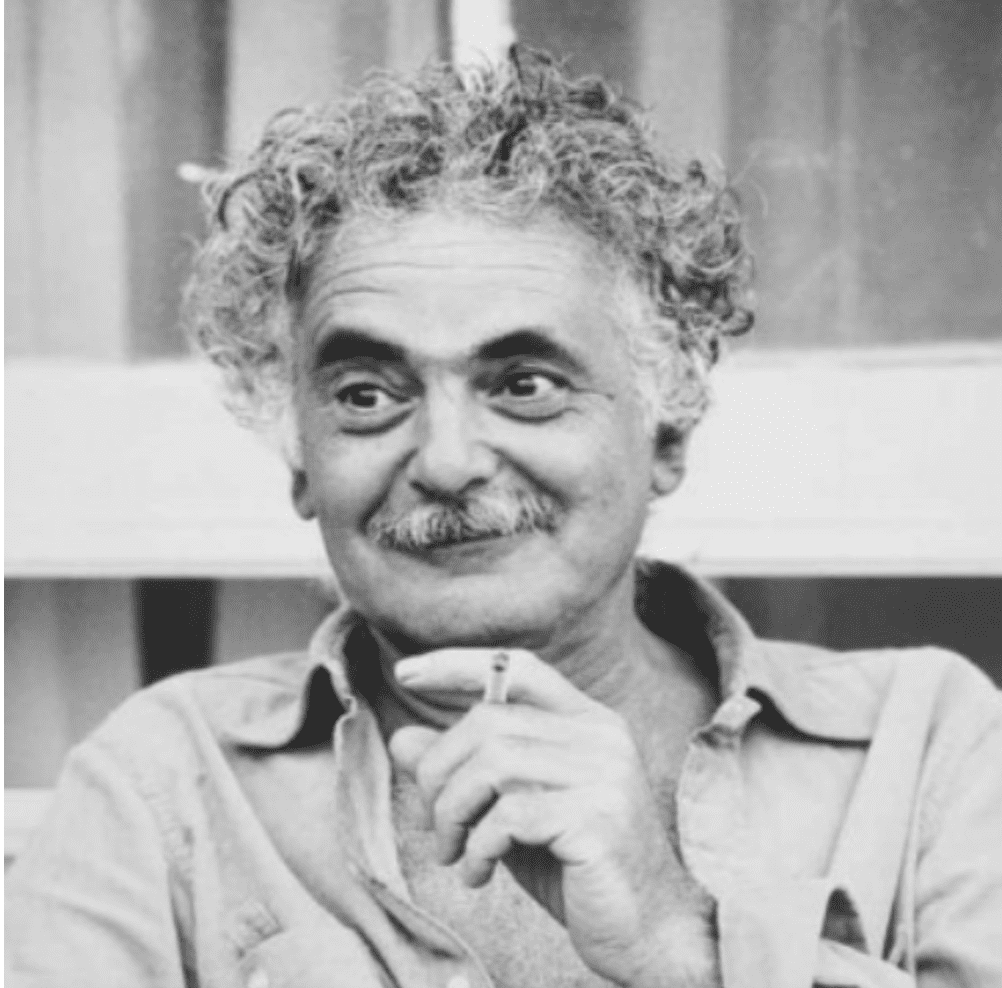

Proving that a creative career can successfully begin at any age was the achievement of John Coplans—an artist, photographer, and curator. By championing new artistic movements, he stimulated profound cultural reflections on human identity and the body. Read more at ilondon.
John Coplans’ Early Years and Artistic Journey
John Coplans was born on 24 June 1920, in London. His father, Joseph Moses Coplans, was active in medicine, science, and the arts. In 1922, he moved the family to Johannesburg. Constantly travelling, the boy grew up moving between Great Britain and South Africa until 1927. Having a close relationship with his father, he inherited his interest in galleries and a passion for experimentation.
In 1937, John Coplans returned to his native country. There, he began his training at the Royal Military Academy Sandhurst. After completing the officer training course, he joined the Royal Air Force. After being disqualified from flying due to an injury, he enlisted in the Seaforth Highlanders (Scottish Rifles). Due to his experience living in South Africa, the serviceman was selected for the King’s African Rifles in East Africa. By the end of World War II, he served in India and Burma.
During peacetime, John Coplans found his true calling in art. Thanks to a special veterans’ support programme, he was able to pursue a professional art education. However, his student life at Goldsmiths’ and Chelsea Colleges of Art did not satisfy him. Instead, he founded the interior design firm John Rivers Limited and took on various art commissions.
John Coplans was deeply impressed by the new art movements emerging in the US. After visiting the Hard-Edged Painting and New American Painting exhibitions, he became involved in the burgeoning discussions surrounding Pop Art and popular art forms. In 1960, he sold all his property and emigrated to California. Settling in San Francisco, he began teaching design at the University of California, Berkeley.
In 1962, John Coplans co-founded the international magazine Artforum. Dedicated to covering trends in contemporary art, it was intended to combat anti-intellectualism. In 1972, Coplans became editor-in-chief. However, the publisher soon offered him a choice: buy the magazine or leave. A lack of funds led the artist to choose resignation.
At the same time, in 1965, John Coplans directed the Art Gallery at the University of California, Irvine, and in 1967, the Pasadena Art Museum. As one of the earliest champions of Pop Art, he actively supported the work of artists like Roy Lichtenstein and Andy Warhol. Upon becoming the director of the Akron Art Museum, he focused on developing the photographic field.
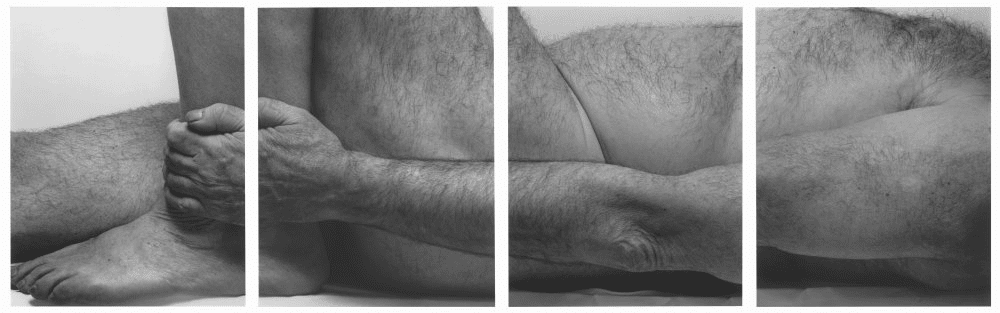
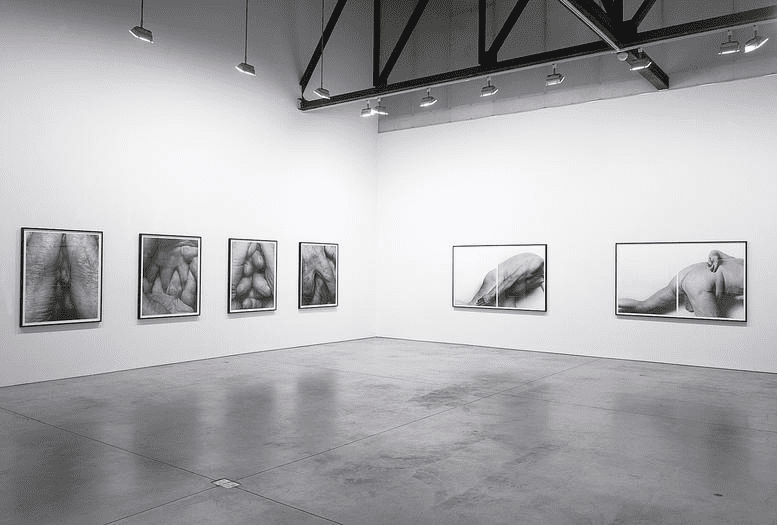
Returning to New York, John Coplans held his first solo exhibition at the Daniel Wolf Gallery in 1981. In his series of self-portraits, he explored the plastic expressiveness, naturalness, and authenticity of the human body. In 1986, the artist proved to visitors at the Pace/MacGill Gallery that even ageing could be intriguing and full of vitality when viewed through the lens. In 1988, he held major exhibitions at the San Francisco Museum of Modern Art and the Museum of Modern Art in New York. He passed away on 21 August 2003, in New York.
Nordenhake
Recognition and Significance of John Coplans’ Creative Work
John Coplans’ creative output is held in over 60 collections, including the Art Institute of Chicago, the Brooklyn Museum, the Center for Creative Photography, and the Cleveland Museum of Art. He also left an important mark on the literary world through his critical essays and monographs on figures such as Andy Warhol, Robert Smithson, Philip Guston, and Donald Judd. For his work, the artist was awarded a Guggenheim Fellowship, a National Endowment for the Arts Fellowship, and the Ordre des Arts et des Lettres.
Andrea Rosen Gallery