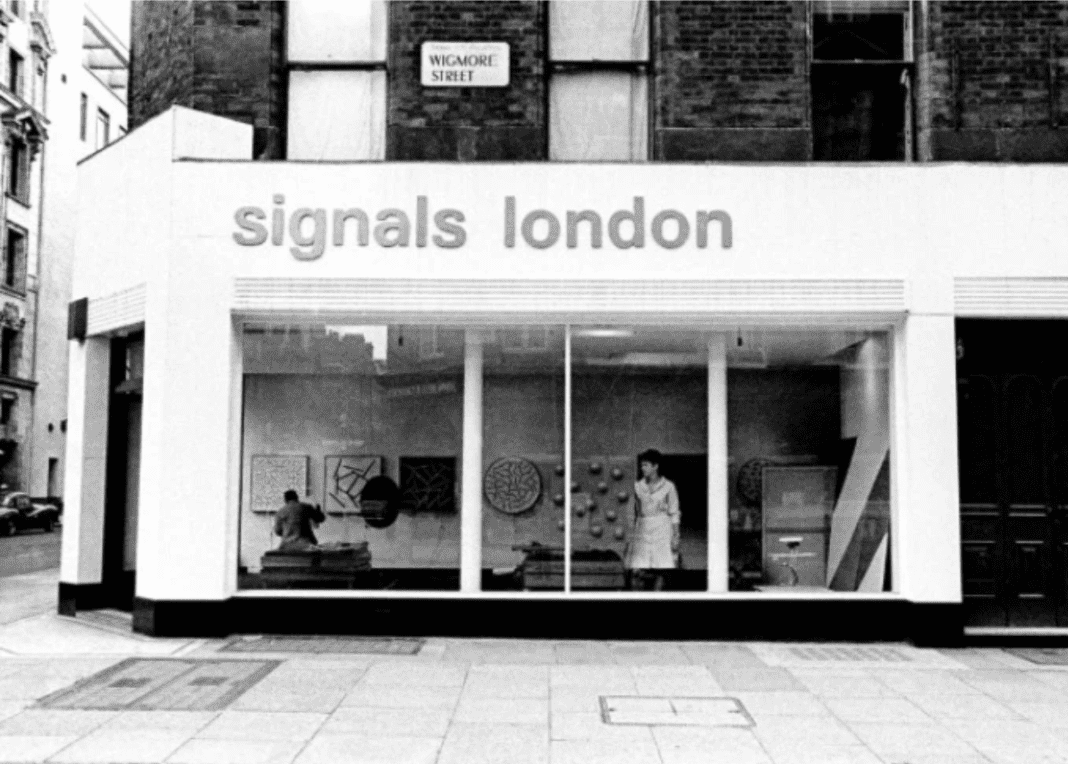

The experimental gallery Signals London once succeeded in expanding the horizons for interaction between creativity and science in Great Britain. Becoming a vital cultural phenomenon, it brought together artists, critics, and researchers from the Americas, Europe, and Asia. In doing so, the group transformed the capital into an international stage for avant-garde explorations in art, media, and technology. Read more at ilondon.
History of the Founding and Development of Signals London
The Signals London international experimental art gallery began its operations in 1964. It opened its doors for the self-expression of European, Latin American, and Asian artists. By showcasing both established and emerging faces, the group aimed to foster creative experiments that blurred the lines between art and technology.
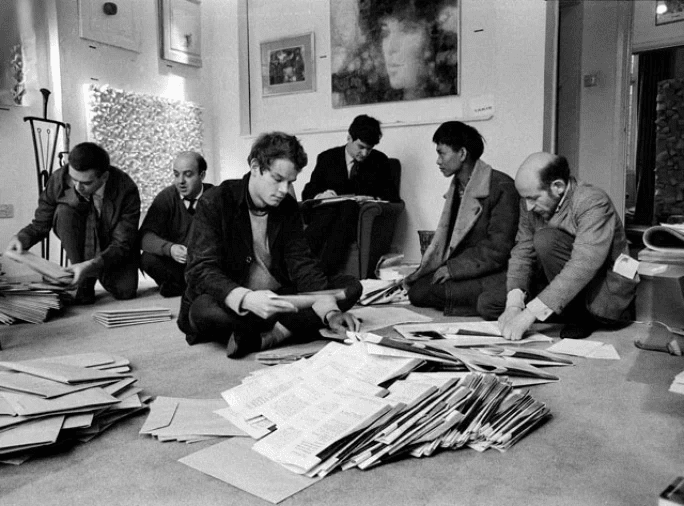
Initially, enthusiasts and intellectuals Guy Brett, Paul Keeler, Gustav Metzger, Marcello Salvadori, and David Medalla founded the newsletter Signals Newsbulletin. It took its name from a series of kinetic sculptures by the Greek artist Takis. Exploring movement, energy, and the interplay of creativity with science, the artworks embodied the concept of the bulletin.
As chief editor, David Medalla defined the experimental and interdisciplinary nature of the Signals Newsbulletin. It was intended to cover events, exhibitions, and projects from the Centre for Advanced Creative Study. Providing a space for self-expression, the bulletin engaged art critics, architects, scientists, economists, and sociologists. In doing so, it sought to introduce artists to the latest achievements in various fields that could enhance their creativity, assist in material selection, and refine techniques.
Soon after, the Signals London gallery began organising its exhibitions at Cornwall Gardens. It joined a limited circle of art institutions that supported young innovators. The group actively merged different art forms that went beyond traditional painting and sculpture. Emphasising an interdisciplinary creative approach, it engaged not only artists but also poets, architects, scientists, and technologists.
Consequently, Signals London gained favour in the West End, the heart of the capital’s cultural and artistic life. After relocating to a new gallery on Wigmore Street, it was able to reach a wider audience. The group then became one of the first centres in Great Britain to actively present avant-garde movements such as Fluxus, kinetic art, and Op Art. Thanks to the improved space, it could effectively showcase complex and multidimensional artistic projects.
Signals London thus transformed into an important platform for Latin American artists, including representatives from the Brazilian and Venezuelan schools. Being at the forefront of artistic innovation, these artists offered new perspectives on space, time, and movement. At the peak of its drive towards the internationalisation of the art process, the group ceased operations in 1966.
Sotheby’s
Legacy and Significance of Signals London’s Exhibition Activity
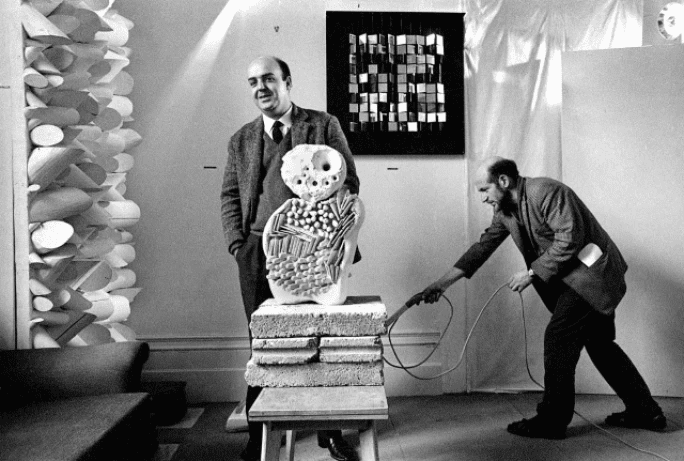
Through its innovative and interdisciplinary approach to creativity, Signals London left a significant mark on the history of experimental art. It became a unique international platform for exchanging ideas and concepts beyond traditional boundaries. A number of pioneering artists were responsible for the success of the group’s exhibitions, including Heinz Mack, Hélio Oiticica, Lygia Clark, Mira Schendel, Carlos Cruz-Diez, and Jesús Rafael Soto. In 2018, contemporaries had the opportunity to explore key moments of its history and creative legacy at a retrospective in London.
Sotheby’s