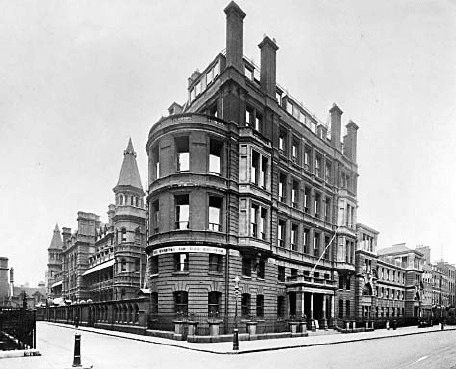

The Great Ormond Street Hospital (GOSH) is regarded as Britain’s first public paediatric hospital. By combining large-scale research with innovative technologies, it developed a range of treatments for children’s diseases, establishing a leading international status. Read more at ilondon.info.
History of the Founding and Development of Great Ormond Street Hospital’s Medical Services
Great Ormond Street Hospital was founded on 14 February 1852, in London, as the first British medical institution to provide inpatient care for children. Its opening was the result of a campaign led by Dr. Charles West, who aimed to tackle the problem of high early childhood mortality in the capital. As an expert in women’s and children’s diseases, he successfully secured support from philanthropists and healthcare reformers to acquire a plot of land for the construction of the specialised facility.
With only 10 beds initially available, the hospital provided free care to children from impoverished backgrounds in general wards, funded entirely by subscriptions and donations during its early years. For the first decade, the professional staff at GOSH consisted of paediatrician and obstetrician Charles West, infectious disease specialist William Jenner, and a surgeon. Facing a financial crisis in 1858, the hospital successfully raised sufficient funds for expansion under the guidance of charity fundraising coordinator Charles Dickens.
Improvements to the specialised institution’s facilities helped boost its reputation and popularity among the general public in the 1860s. Following the advice of the Prime Minister of Great Britain, the administration decided to open an additional convalescent home as its own branch in 1869. By 1870, the clinical staff at GOSH comprised 24 nurses, 7 physicians, 5 surgeons, a dentist, and a pharmacist. The hospital’s two original buildings eventually struggled to accommodate all those in need, leading to expansion with both standard and isolation wings.
Establishing itself as a training and research centre for paediatric diseases, it took a leading position nationally and internationally by the early 20th century. The centre’s updated capabilities extended to providing services from an ophthalmologist, anaesthetist, pathologist, bacteriologist, and radiologist. On its initiative, a medical school was founded in 1909, headed by the first dean, Dr. Penrose. GOSH prioritised the professional training of private nurses to serve both poor and wealthy sections of the population. As a result, in 1930, junior medical specialists continued their activities in a newly created, separate facility.
In 1948, the achievements of the specialised institution were approved and rewarded with membership in the National Health Service (NHS). In 1989, the Princess of Wales, Diana, became its new President, a role she held until her death. Following her departure from leadership, GOSH shared the organisational duties for the Charles West School of Nursing with London South Bank University. After undergoing further reconstruction, the hospital was included in the official opening ceremony programme for the London 2012 Summer Olympic Games.
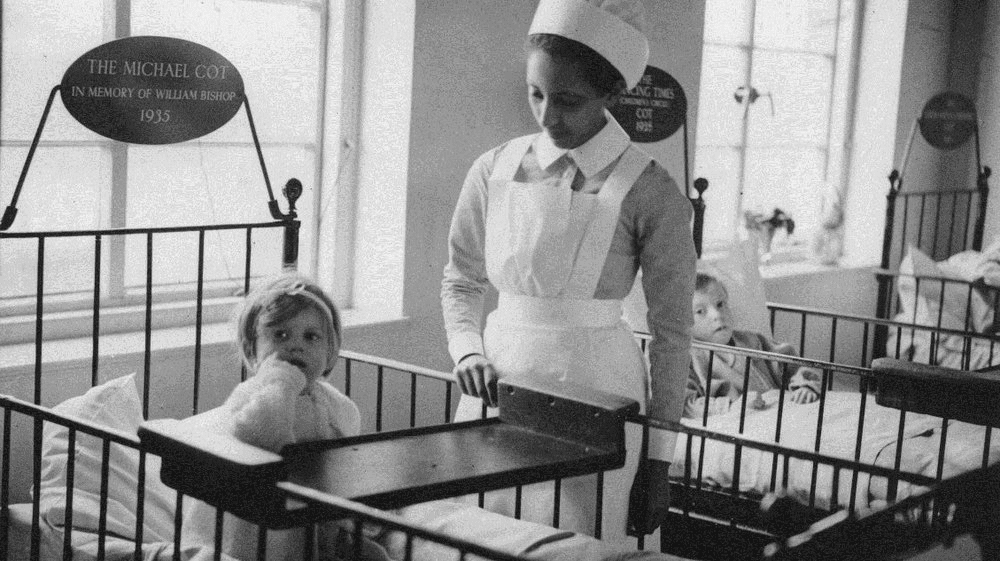
Great Ormond Street Hospital Charity
The Significance and Role of Great Ormond Street Hospital in British Paediatrics
Great Ormond Street Hospital pioneered the medical use of the Drinker respirator (iron lung), the heart-lung machine for children, and the paediatric CT scanner in the UK. It also led the initial public trials for the rubella vaccine, gene therapy, bone marrow transplantation, and trachea transplants. Consequently, the medical institution’s contributions ensure it remains the largest centre for paediatric research in Europe.
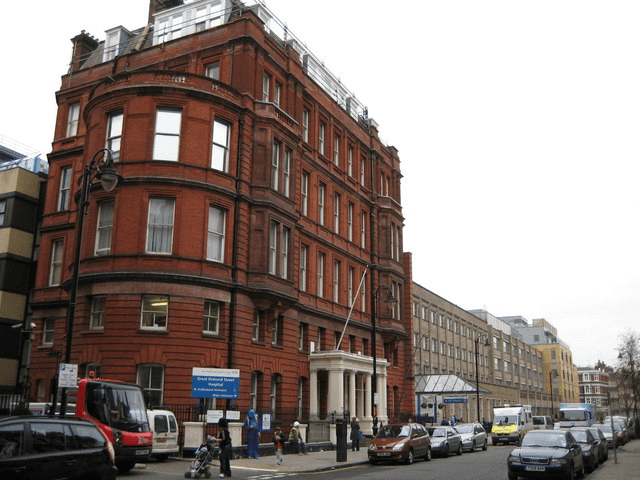
Wikipedia