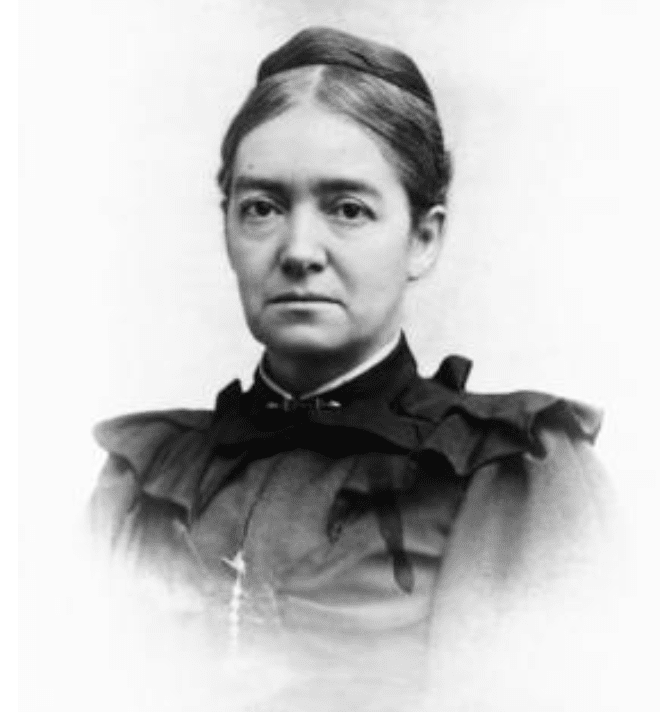

A significant contribution to the development of women’s medical education in the US was made by Mary Putnam Jacobi—a doctor, scientist, and suffragist originally from London. Her pioneering journey took her from being a trailblazer in academic settings to expanding her qualifications within leading international organisations. Read more at ilondon.info.
Mary Putnam Jacobi’s Early Life and Professional Development
Mary Corinna Putnam was born on 31 August 1842 in London. As the eldest daughter among 11 children, she was raised by her father, American publisher and writer George Palmer Putnam, and her mother, Victorine Haven Putnam, who was British. After setting up a branch of his publishing company, Wiley & Putnam, in New York, her father decided to move the entire family to the new location in 1848. During her childhood and youth in America, Mary Corinna Putnam began her education at home. She later attended a private school in Yonkers before graduating from a public school in Manhattan in 1859.
Despite her developed aptitude for art and political writing, the young woman felt her true calling was medicine. After finishing secondary school, she studied Greek, science, and medicine under the guidance of the first woman to earn a medical degree, Elizabeth Blackwell. Although George Putnam initially considered medicine an inappropriate profession for his daughter, he eventually provided financial support for her enrollment at the New York College of Pharmacy. She became the first woman to receive a medical education from the American school of pharmacy and went on to study at the Woman’s Medical College of Pennsylvania. After earning her Doctor of Medicine degree in 1864, the graduate took the opportunity to complete an internship at the New England Hospital for Women and Children.
Driven to acquire qualifications at a level previously unattainable by women, Mary Corinna Putnam travelled abroad to fulfill her academic ambitions. In 1866, she became a regular visitor to clinics, lectures, and classes at the École Pratique in Paris. She eventually enrolled in the Paris University Medical School, becoming the first woman to be admitted in 1868. During her studies, the student also wrote articles and stories for the Medical Record, Putnam’s Magazine, the New York Evening Post, and Scribner’s Monthly. After graduating with honours in 1871, she returned to New York and headed the Association for the Advancement of the Medical Education of Women in 1872. Serving as its president from 1874 to 1903, Mary Corinna Putnam spearheaded the movement to overcome the limited educational and professional opportunities available to women.
In 1873, she married the German physician Abraham Jacobi, who later became a pioneer of American paediatrics. During this time, her professional activities included establishing her own medical practice, participating in research, and teaching at the Woman’s Medical College and Mount Sinai Hospital. From 1882 to 1885, Mary Putnam Jacobi served as a lecturer in paediatrics at the New York Post-Graduate Medical School. Using her practical and consulting expertise, she successfully organised the children’s ward at the New York Infirmary in 1886. In 1888, the scientist was compelled to leave her teaching role at the women’s educational institution due to the American medical society’s resistance to her advanced knowledge and skills.
A brain tumour was later determined to be the cause of her deteriorating health towards the end of her life. Following her diagnosis, she wrote “Description of the Early Symptoms of a Meningeal Tumor Compressing the Cerebellum. From which the Writer Died. Written by Herself” as a final scientific paper. The doctor passed away on 10 June 1906 in New York and was buried in Green-Wood Cemetery in Brooklyn.
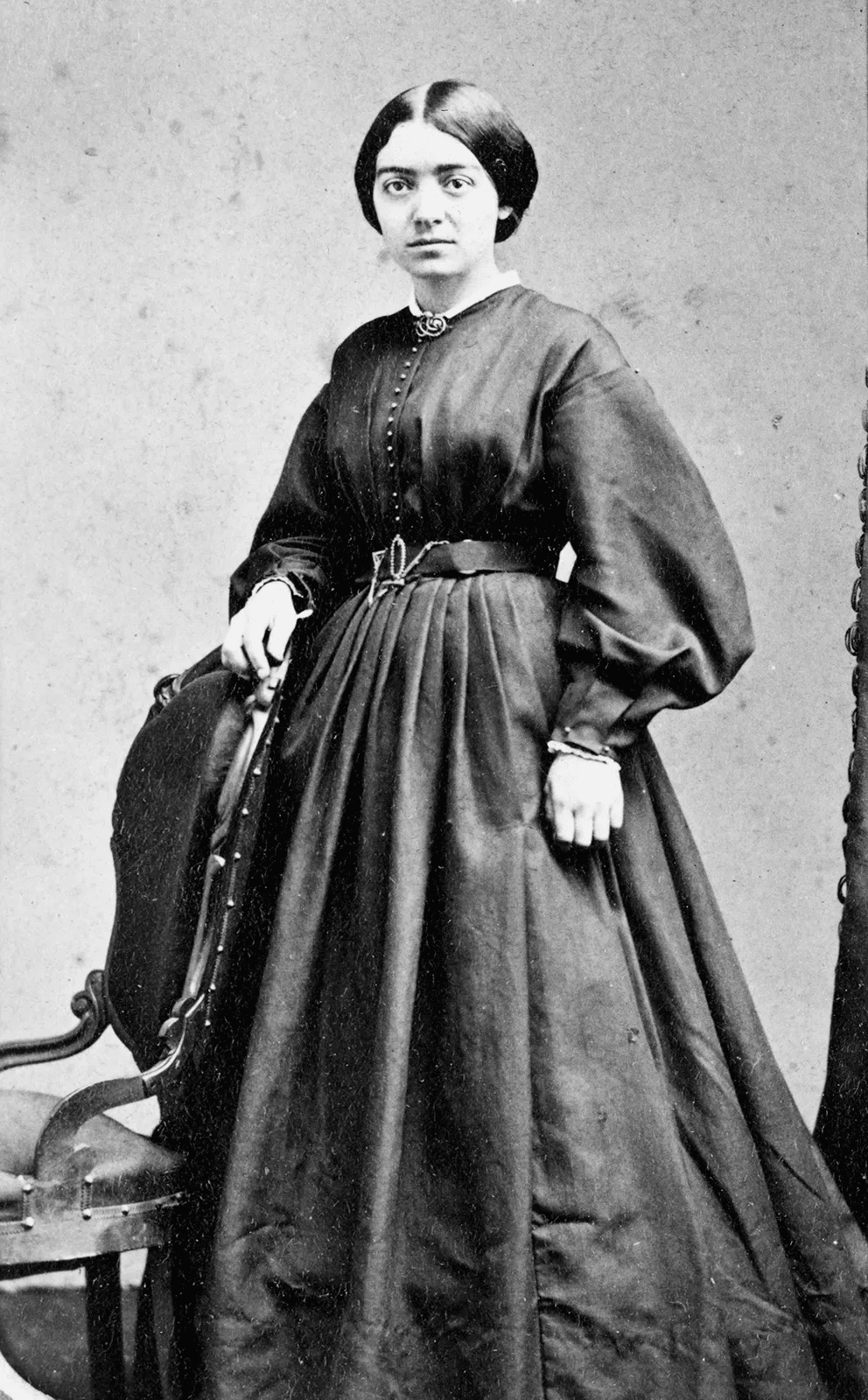
Britannica
Legacy and Significance of Mary Putnam Jacobi’s Medical Work
Mary Putnam Jacobi remains an important figure in the history of medicine and the suffrage movement. Her scientific legacy includes over 120 medical articles and 9 books, among them “The Question of Rest for Women During Menstruation”, which was nominated for the first Boylston Prize open to women. As a pioneer in the American educational system, she co-founded the League for Political Education and the Women’s Medical Association of New York, and was posthumously inducted into the National Women’s Hall of Fame in 1993.
Tulane School of Medicine