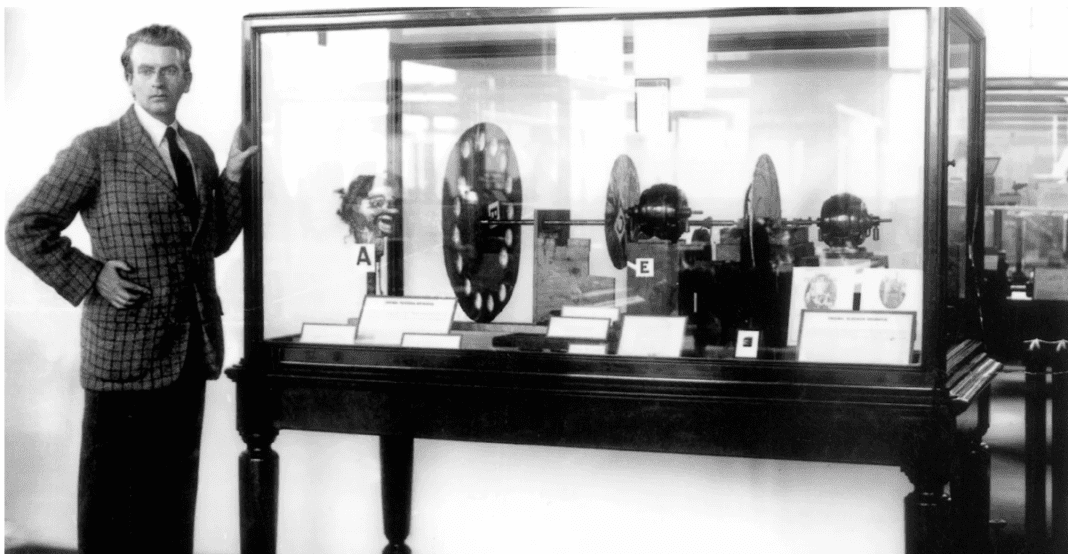

In the first half of the 20th century, people gained the ability to immerse themselves in the world of visual mass media. This new source of news, education, and entertainment quickly entered everyday and professional life across various parts of the world. The initial stage in the development and distribution of audiovisual programmes was mechanical television—an early technology for transmitting television images. However, it faced a number of obstacles on its path to developing quality remote broadcasting. Read more at ilondon.info.
History of the Founding and Development of Mechanical Television
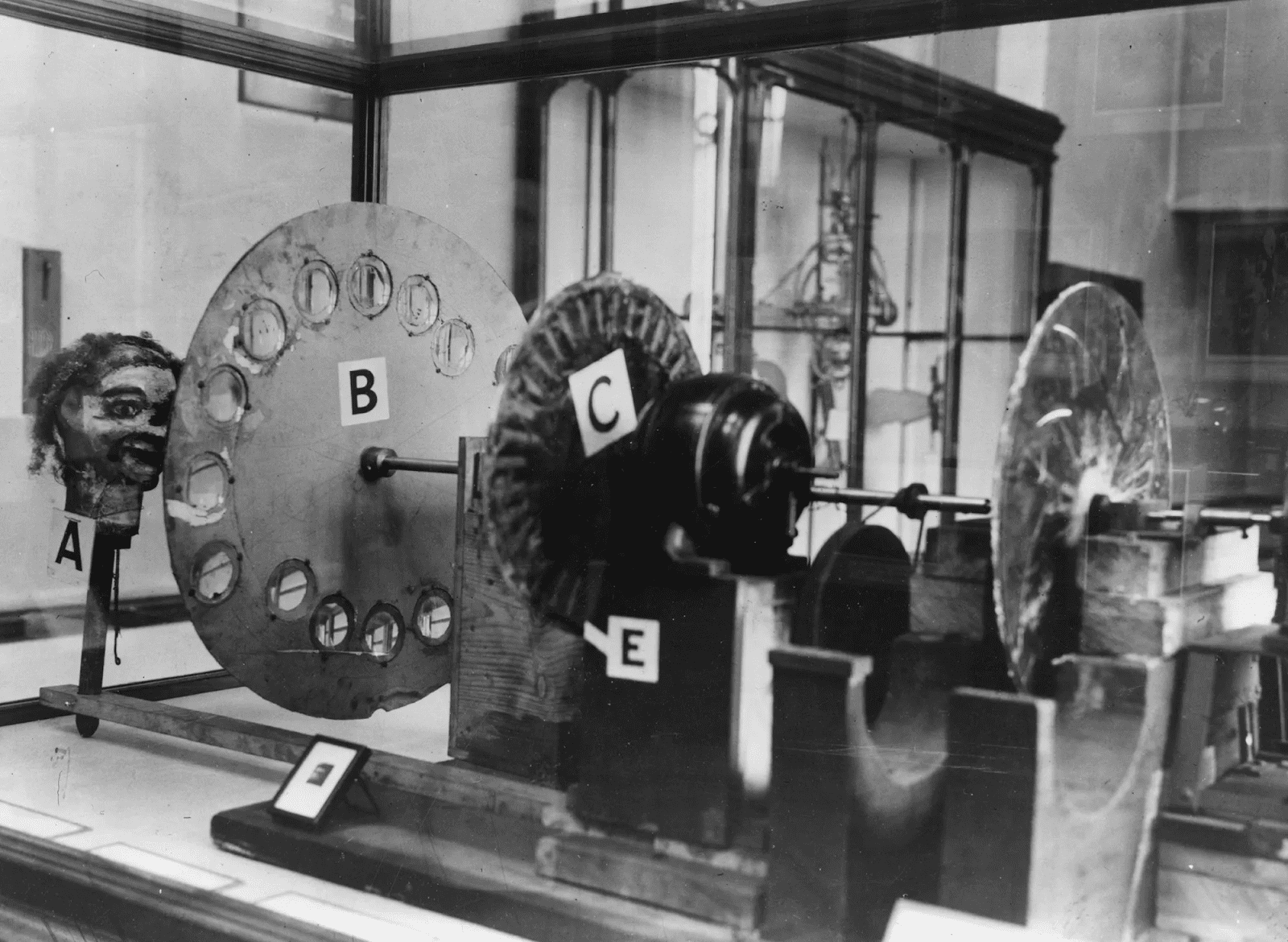
In 1843, Scottish inventor Alexander Bain authored the idea of using mechanical means to scan an image. In 1884, German technician Paul Nipkow invented the scanning disk, which later became the foundation of mechanical television. However, the necessary vacuum tubes and photocells were unavailable at that time to create a transmission system.
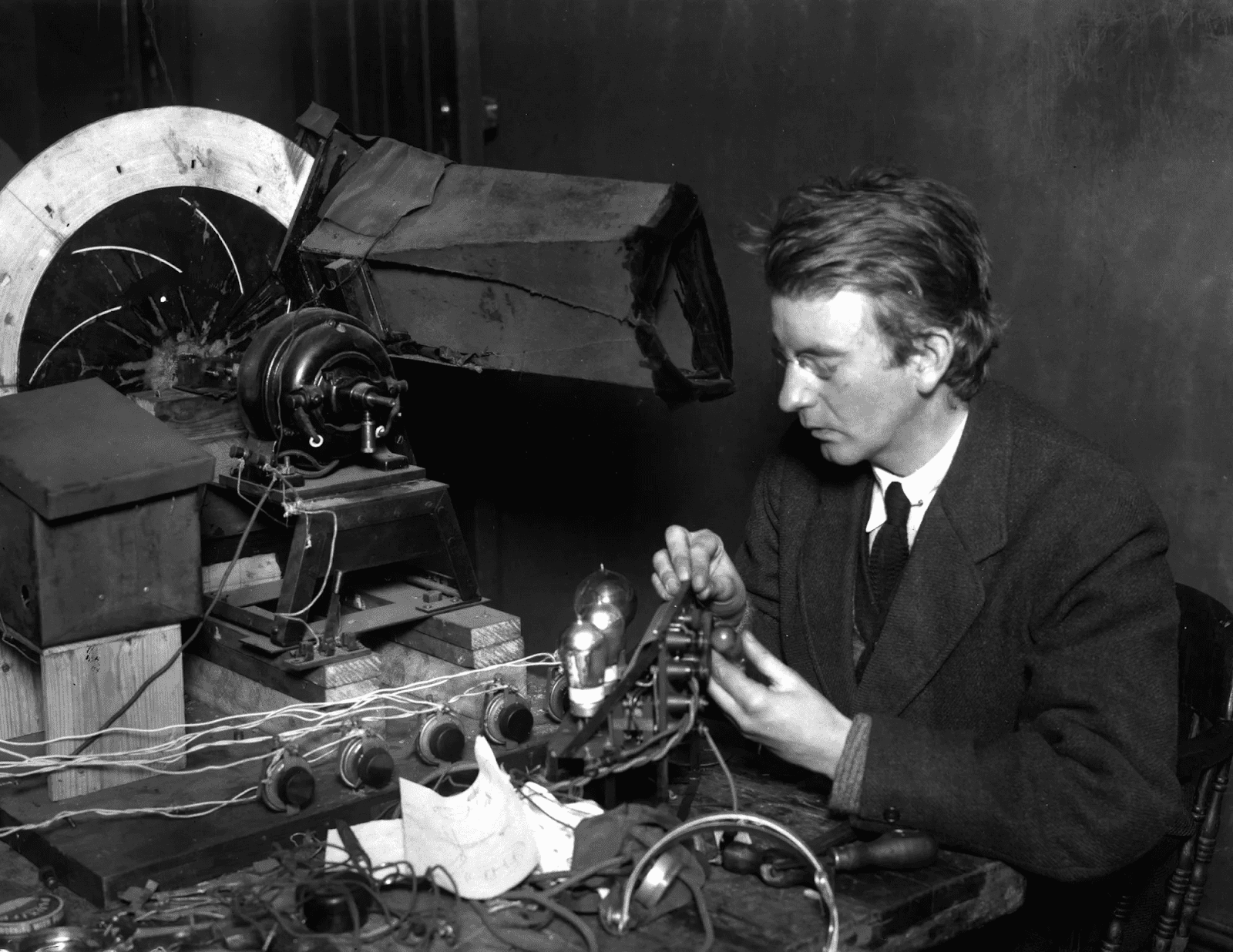
In the early 20th century, inventors focused on perfecting Paul Nipkow’s television patent. The first mechanical television systems evolved from relaying telegraphs and clockwork mechanisms. Devices for displaying moving images appeared in the mid-1920s. On 2 October 1925, London became the site of one of the first experimental wireless television broadcasts, led by Scottish engineer John Logie Baird. By 1928, many radio stations began using mechanical systems for experimental transmissions. Following this, mechanical television spread among the public, allowing people to watch new programmes in various parts of the world.
However, the new technology failed to gain public favour due to poor image quality. American stations at the time either had local standards or none at all. Since a television receiver from one station often couldn’t display an image from another, people struggled to enjoy the viewing experience. Subsequently, the British Scophony system introduced a unified mechanical technology that delivered high-quality images.
Nevertheless, by the mid-1930s, electronic scanning technology gained the upper hand, as it was used in the first commercially successful television broadcasts. During the height of the Great Depression, the US conclusively switched to this superior alternative, stopping transmissions from almost all mechanical stations by 1933. Due to the loss of audience demand, manufacturers like Majestic, Western, de Forest, and Jenkins went bankrupt. Meanwhile, transmissions continued in the UK until 1935, and in the Soviet Union until 1937.
The primary reasons for the decline of mechanical television were its limited resolution and low image quality. Consequently, the new method of broadcast transmission became electronic television, which American inventor Philo Taylor Farnsworth had been working on since 1920. By generating fast, high-quality images using electronic signals, it paved the way for the subsequent development of mass media worldwide.
Vox
Summary and Significance of the Appearance of Mechanical Television
Mechanical television was the first crucial step on the path to developing innovative visual broadcasting. Electronic television later learned from its lessons, improving its technical and programmatic aspects. Yet, it is important to remember that mechanical television had to develop amidst the challenges of the Great Depression, restrictive trade regulations, and competitive pressure. During its brief existence, it managed to spread across the US, Great Britain, Germany, France, the Netherlands, Argentina, Japan, Australia, and other countries.
Vox