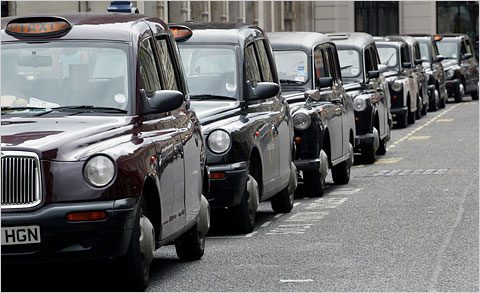

Taxi is considered one of the main and most demanded types of transport in almost every corner of the world. Quite often, it is the only possible option to reach the destination on time and conveniently. A lot can be said about the advantages and disadvantages of taxis, but each country has its own history of their development. This type of transport is also associated with certain symbols, traditions and legends. London also has an interesting history of the appearance and development of black cars on the streets of the city. At first glance, such ordinary cars have repeatedly helped to recreate the special atmosphere of the city in many films and have also become a kind of symbol of the capital of Great Britain. Learn more at ilondon.
What preceded the appearance of taxis in London?
People all over the world have repeatedly tried to find convenient methods of movement. As you already know, animals and wheeled carts differing in shape, colour and convenience were often used for this purpose. In London, the first transport that was similar to a modern taxi appeared around the 1580s. During that period, representatives of the aristocracy began to use carriages. Residents of the cities also liked that idea, and already in the early 1600s, this kind of transport increased in number significantly. However, it led to clashes and obstruction of movement on the streets of the city. Therefore, in 1635, a new order established certain restrictions on the number of carriages. In addition, a coach licensing system was developed in 1637. Thus, traffic in London was somewhat systematised. Of course, not all carriages were taxis. Most of them were individual and were intended exclusively for personal use. However, if we talk about the appearance of the first transport for renting, we should note exactly that historical period. In addition, there was a difference between private and public carriages. The latter were equipped to accommodate four passengers. They also had two more seats outside (one for the servant and the other for the groom). Over time, carriages improved and the further development of taxis was significantly influenced by the appearance of cars.
The origin of the name
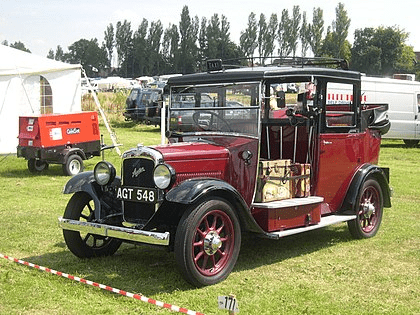
Motorised carriages appeared in London at the beginning of the 20th century. Later, they completely replaced horse-driven ones, which existed until 1947. Thus, compact (for convenience and manoeuvrability) black cars appeared on the streets of the city. They were called hackney (or hack for short). The origin of this name is not known for sure, however, there are several theories. The first of them is closely related to horses. Hackney is a horse breed that was bred in Great Britain. They were used specifically for pulling carriages for a long time. This etymology was also supported by the American Hackney Horse Society. Such a name seems quite accurate because of the history of taxi development, which is associated with horses. Moreover, the word haquenée is translated from French as a medium-sized horse. Despite all these facts and common features, there is another theory related to the name of the London borough. However, there is quite little evidence to confirm such an etymology, while the association with horses looks more interesting and convincing. It is interesting that the words hack (taxi) and hackstand (taxi stand), which are very often used in New York, also come from the name hackney. Thus, London taxis became known far beyond the borders of the country.
Further development in the city
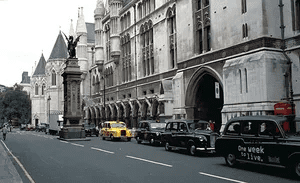
Taxis experienced rapid development in London after the end of the Second World War. Then the country gradually began to recover and the demand for such transportation increased. That period also explains the symbolic colour of the cars. Even before the beginning of the Second World War, you could see cars of different colours (especially with advertisements) on the streets of the city. Brown cars were also very popular. London has never had any relevant laws or regulations regarding the colour of taxis. However, after the end of the war, standard black cars were produced in factories. That’s it. There was no other reason. They were produced in this colour. These cars fit the style of London so well that you can see them even today.
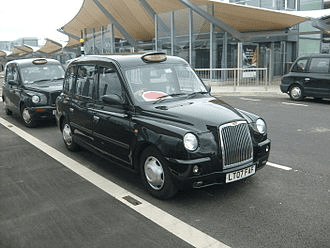
Throughout the history of London taxis, the interior and exterior of the cars have been constantly changing. Thus, Austin FX3 cars became popular after the end of the war. They were developed by the Austin company in accordance with the Metropolitan Police Conditions of Fitness, which were introduced by the local government body Transport for London back in 1906. Those cars were sold until 1958. Later, Austin FX4 cars filled the streets of London. This model was very similar to the previous one but had certain improvements. In 1997, London Taxis International introduced the LTI TX1 to replace the ageing Austin FX4. Most of those cars had Nissan diesel engines. Their improved interior included Cabvision technology. Later, more advanced TXII and TX4 models appeared in the city.
Legendary cars in modern London
The emergence of new technologies requires modern solutions in every area of our life. It also applies to London taxis. Thus, this type of transport began to improve at a rapid pace in the 21st century. For example, in 2011, the city developed several digital applications using which you can not only call a car but also track its movement and conveniently pay for the service. The most popular among them are GetTaxi and Hailo. They are perfectly adapted for smartphone users. During the entire history of taxis in London, advertisements were often placed on the cars. Therefore, in 2011, Eyetease Ltd. introduced digital screens on the roofs of taxis. The government and residents of London are also paying attention to environmental issues. In 2010, the mayor of the city created a strategic document that aimed to encourage taxi owners to gradually switch to low-emission cars. From 2018, all new licensed cars must be zero-emissions ones.
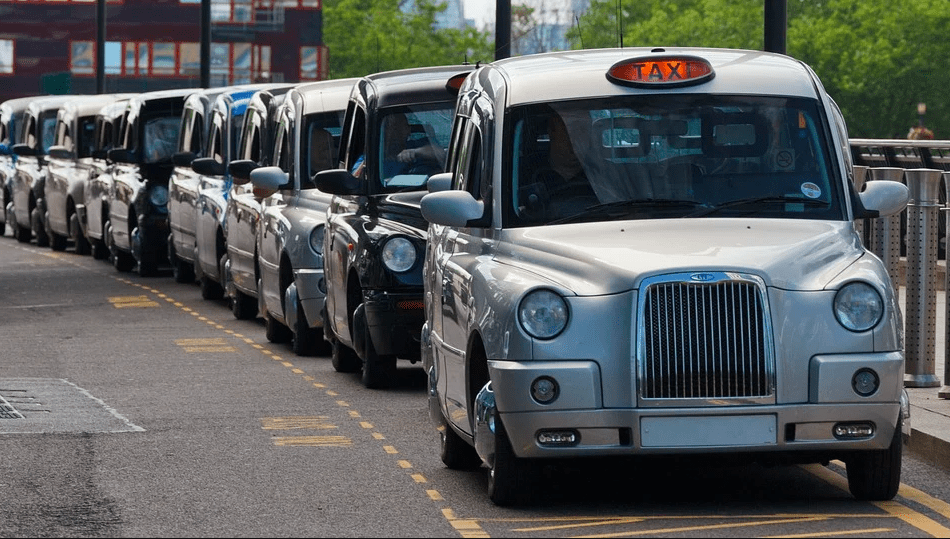
In general, the entire system requires a rather serious attitude. In such a bustling city as London, drivers must be clearly aware of their responsibility. Therefore, their qualification is important. Every driver must pass The Knowledge test. Only in this case, they can become a member of the Worshipful Company of Hackney Carriage Drivers and get a job. The exam requires the candidate to demonstrate knowledge of not only traffic rules but also city street layout. The driver must be well-oriented in the city and know general information about the numerous outstanding buildings in the capital of Great Britain. Road closures are also possible due to constant traffic or various events. All of these factors require the driver to act decisively and react quickly. After passing the test, the driver receives one of two types of badges. The yellow one allows working in suburban areas and the green one throughout London. Obviously, the green badge requires a higher level of skills.