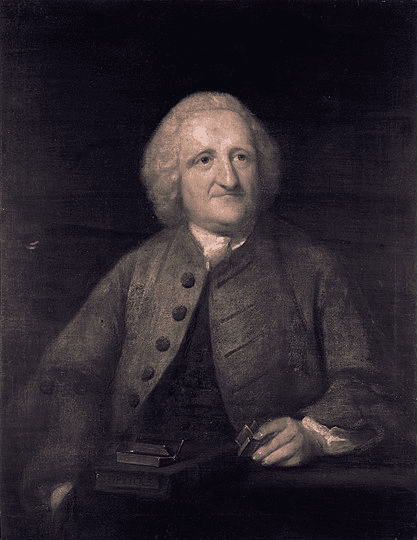

Astronomy has always occupied one of the leading positions in the scientific sphere of London. The capital of Great Britain is home to many interesting objects, buildings and educational institutions related to astronomy. A large number of research papers and experiments were conducted in this city throughout its history. Scientists played an important role in the development of this field. John Dollond was one of them. He is famous not only in his own country but also abroad. The scientist carried out a lot of interesting research, published many scientific works, and most importantly, he was engaged in the creation of optical devices and even opened his own enterprise. Learn more at ilondon.
Main facts from biography and first steps in professional activity
John Dollond was born in London on June 21, 1706. He belonged to the family of Huguenot refugees. His father was a silk-weaver. The family managed to start their own business and John took part in it from his childhood. He spent quite a lot of time with his father at work. However, the boy also had a knack for science and combined studies with business responsibilities. He learned anatomy, mathematics and physics, as well as ancient Greek and Latin languages. However, he didn’t succeed as a scientist right away. At first, John Dollond was engaged in the family business for a long time, created his own family, and finally, decided to fully immerse in science at a mature age. In 1729, he married Elizabeth Sommelier. The woman already had two sons and three daughters. However, despite all this, John Dollond found time for writing papers and conducting other scientific activities. For example, from 1753 to 1754, he published two of his articles on devices for measuring small angles. In 1752, he left weaving and joined his son’s company.
Scientist’s short but fascinating career
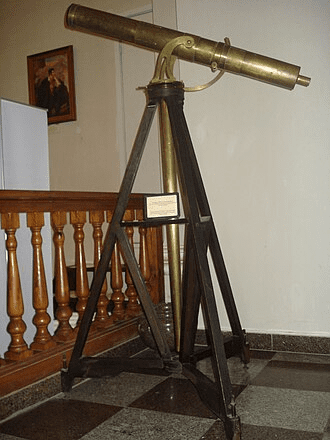
Photo source: Wikipedia
John Dollond’s eldest son Peter founded the Dollond & Aitchison company in 1750. It was engaged in the production of various optical instruments. John became quite famous after joining that business. He went down in history as one of the most successful manufacturers of optical devices in England. However, the patent of the achromatic doublet brought him the greatest fame. This story isn’t as flawless as it may seem at first glance. Several scientists worked on this invention, but they didn’t patent it in time. So, in fact, John Dollond is considered the first to invent such lenses. Shortly before that (in 1757), the scientist managed to create achromatic refraction using glass and water lenses. The patent for the achromatic doublet was officially issued on April 19, 1758, with a validity period of 14 years. In the same year, the scientist published the article Account of some experiments concerning the different refrangibility of light. In this scientific work, he described all the experiments underlying the invention. In particular, the article mentioned the technology of creating achromatic lenses using a combination of crown and flint lenses. This method enables the reduction of chromatic aberration. The invention caused many disputes, and later, John’s son had to prove the ownership. After the death of his father, he had to defend it in court several times and received a rather satisfactory result. Representatives of judicial institutions relied primarily on the fact that John Dollond directly applied this invention, while other scientists didn’t. The scientist was a member of the Royal Society of London, and in 1761, he became an optician at the royal court. However, his professional career was short, as John Dollond died of an apoplexy on November 30, 1761.