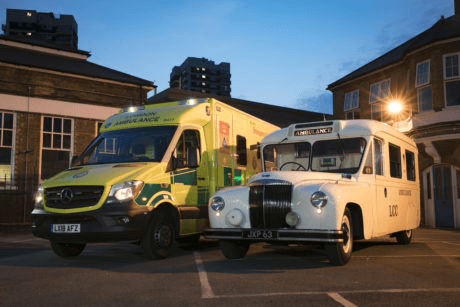

An ambulance is one of the most important services that save lives all over the world. Its history dates back to ancient times when people in different countries used various methods of moving patients. Back then, they used ordinary stretchers or more exotic means. However, the first official case of medical transport usage occurred during the evacuation of wounded Spanish soldiers in 1487. Later, other countries started to adopt that practice. London hospital workers also felt the need to create alternative methods of medical transportation. What was the first medical transport in the city and why is it currently one of the best in the world? Learn more at ilondon.info.
Horses instead of the modern car engines
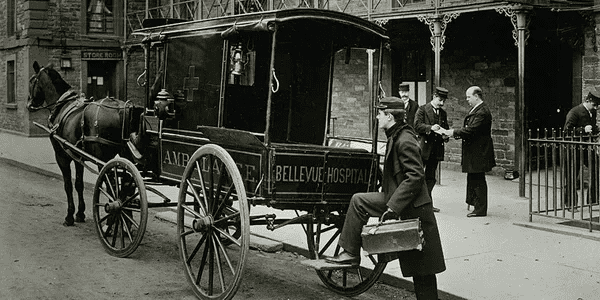
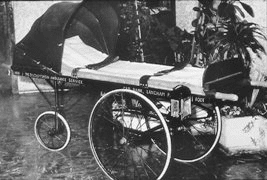
1818 can be considered the first year when people started to use medical transport for delivering patients to the hospital. Back then, the London authorities emphasised the need to organise the transportation of people with infectious diseases. However, in fact, nothing was changed or created. There were some sporadic cases, but they weren’t controlled by the authorities, and as a result, weren’t included in the official statistics. The first steps in that direction were made in 1866. In that year, London hospitals were provided with six carriages, though they should pay for the hire of horses. Thus, the first medical transport in the city was a carriage with a lying place for the patient and the front groom seat. It is worth saying that the number of carriages was not enough for such a big city, and therefore, not all residents of London had the opportunity to use such services.
The situation changed in 1879 when, according to the new law, any person (regardless of their social or financial status) had to be provided with transportation. Since then, the development of London ambulance services has begun to progress at a rapid pace. The number of horse-drawn carriages was expanded and special boats were introduced to transport the sick across the Thames to the quarantine ships. Usually, they were used in case of infectious diseases to prevent large-scale epidemics. In addition, an entire horse-drawn tramway was designed and built in 1897. Later, animals were replaced by cars. The last case of using a horse-drawn carriage as an ambulance was recorded in 1912.
The use of the first ambulance cars
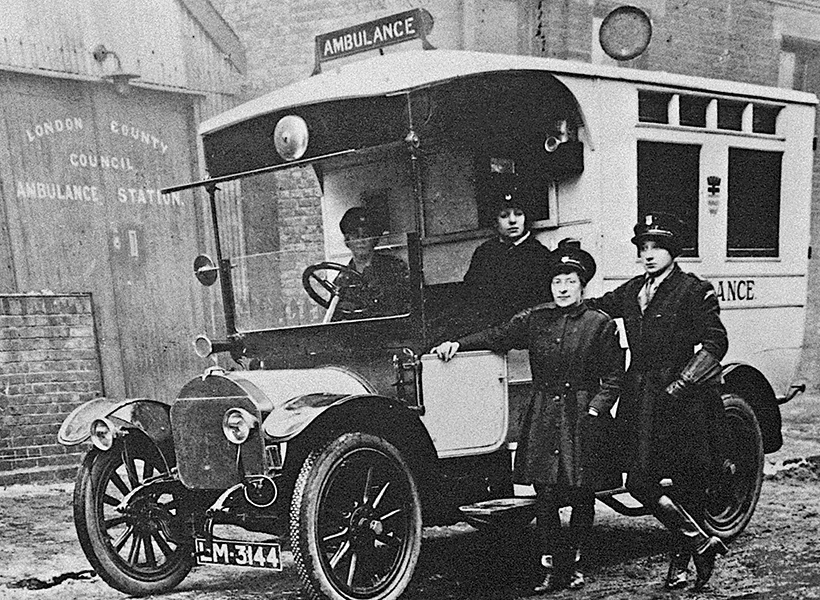
The first ambulance car appeared on the streets of London in 1904. That was a serious breakthrough because the transportation process became much faster. Interestingly, the algorithms of ambulance actions were developed exclusively for infectious diseases, but from the moment the medical services received cars, workers got the opportunity to cover emergency cases, such as car accidents, as well. For this reason, the government allowed the creation of a separate emergency ambulance service in 1909. But its first brigades were formed only in 1915. Meanwhile, another and rather unusual phenomenon for those times took place too. Women were allowed to drive an ambulance. Of course, that stunned many Londoners, but it was an answer to historical challenges. Many men died during the First World War and women started to adopt a lot of untypical and hard work. There were even separate female brigades in the city.
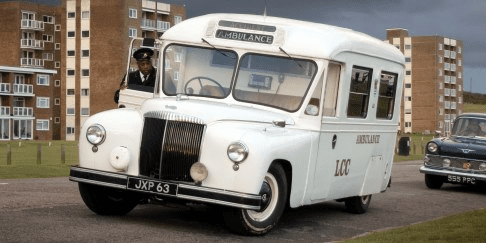
1930 was an important year. At that time, the local government reorganisation resulted in the transfer of responsibility for emergency medical care facilities to London County Council subordination. Ambulances functioned effectively even during the Second World War, and when it was over, they helped everyone who needed it.
London Ambulance Service NHS Trust, the busiest service in the world
London Ambulance Service NHS Trust is the ambulance service with the highest number of calls in the UK. It is also one of the first services not only in London but in the whole country, which was formed at the end of the 19th century. Its history is extremely eventful and thanks to its collection of medical transport, you can explore the history of the city’s ambulance service. The collection presents more than 20 sanitary vehicles as well as the first means of patient transportation, manual one-seat carriages and horse-drawn carriages. Currently, the service can boast many exhibits that can acquaint everyone with the medical practice of the past. The collection includes unique documents, samples of the first uniforms, plans, photographs, various types of equipment, badges and medals. Of course, many years have passed since the creation of this service, and accordingly, treatment methods and medical tools have undergone significant changes too.
How does the service function nowadays and what are its features?
The development of this ambulance service can easily be compared with the transformation of London, which has changed almost completely for hundreds of years. London Ambulance Service NHS Trust has undergone some improvements as well. It is difficult to compare the professionalism and skills of modern doctors with their predecessors. The equipment development goes without saying. In the 21st century, the service’s protocol of actions is designed in such a way as to provide assistance to victims as quickly, qualitatively and professionally as possible. It should be effective regardless of the degree of complexity or external distractions. Doctors and other medical workers of the brigade are clearly aware that a person’s life depends on their actions. That’s why only highly qualified specialists who have undergone serious training can be hired. The planning of actions and the distribution of duties help the service provide emergency medical care. In case of large-scale accidents, a group of ambulance cars are coming to the scene, as it was on the day of the terrorist attack, which happened in London on July 7, 2005. Service representatives acted in a coordinated and professional manner, which helped save people’s lives.
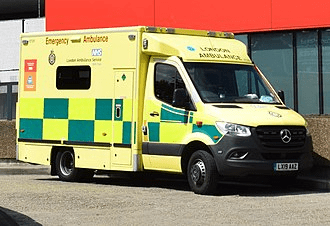
Despite the popularity and good reputation of the service, the dispatching system often became a subject of criticism and indignation due to its frequent malfunctions. For many years, they tried to overcome the problems and introduced various alternatives, but it was not possible to completely eradicate errors. Interestingly, in 2019, the GoodSAM platform was developed, which allows service workers to connect to the victim’s phone and assess their general condition. Its transportation unit deserves attention too. The service owns 450 ambulance cars that are always ready to help. In addition, the service uses ordinary cars, motorcycles and bicycles, equipped with everything necessary for providing emergency assistance. The service even uses helicopters in extraordinary situations.