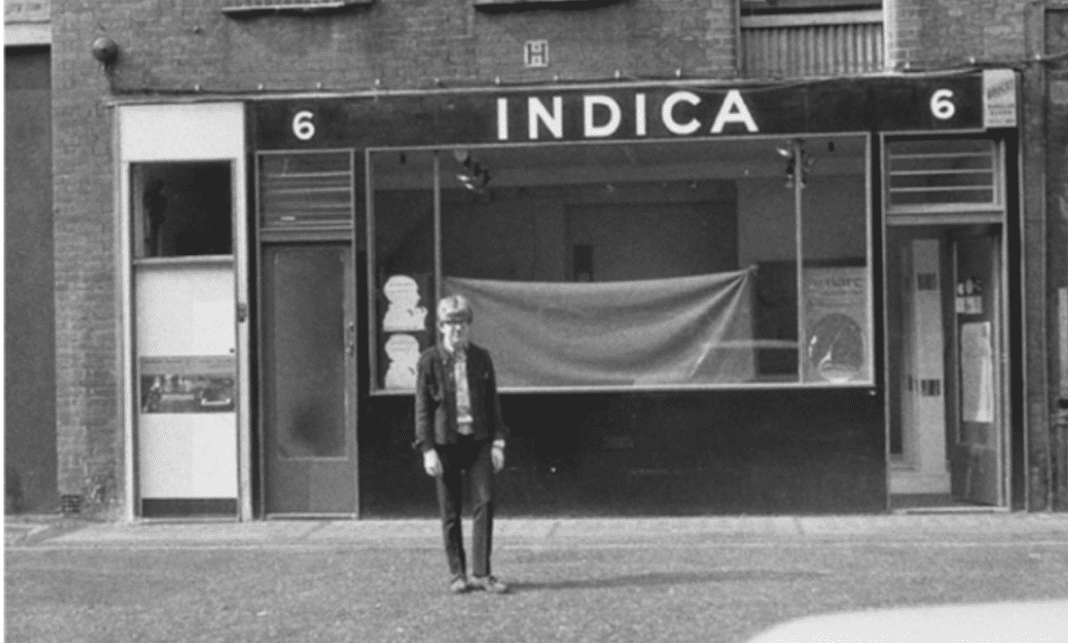

The Indica Books & Gallery successfully created a vital space for artistic and literary experiments. The venue became a symbol of the cultural transformations of the 1960s, a place where different art forms intersected, new ideas were born, and creative communities were forged. Read more at ilondon.
History of the Founding and Development of Indica Books & Gallery
In the 1960s, Barry Miles managed the alternative bookshop Better Books. When the shop came under the control of new, conservative owners, he decided to launch his own project. A fateful meeting with John Dunbar, who dreamed of opening a gallery, proved pivotal for the artist. Peter Asher soon joined them. Combining their efforts, the enthusiasts founded the company Miles, Asher and Dunbar Limited.
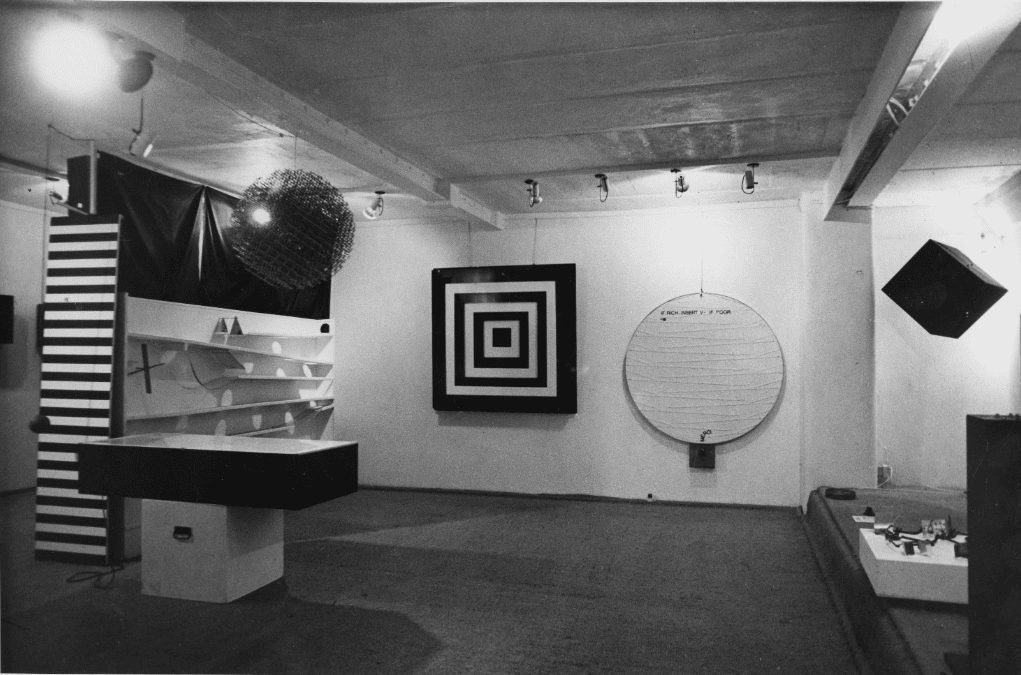
In September 1965, the vision of Barry Miles, John Dunbar, and Peter Asher became a reality—Indica Books & Gallery opened its doors. Functioning as both a bookshop and an art gallery, the venue was located at 6 Masons Yard, London. Its name derived from a variety of cannabis, serving as a symbolic representation of freedom, creative experimentation, and underground culture. Replacing Signals London, the space quickly became the new epicentre for Op Art and kinetic art in Great Britain.
Paul McCartney was the first visitor to Indica Books & Gallery, even before its official opening. At the time, he was in a romantic relationship with Jane Asher, the sister of co-founder Peter Asher. Spending nights in the basement of their family home, the musician browsed the book collections and left notes about his chosen titles for later payment. His contributions to the project were multifaceted, ranging from designing promotional flyers to developing the branded wrapping paper.
The first official exhibition at Indica Gallery took place on 4 June 1966. It was presented by the Groupe de Recherche de l’Art Visuel (GRAV)—a free association of artists working in the kinetic art movement. During this period, GRAV co-founder Julio Le Parc was awarded the International Painting Prize. This victory not only raised the exhibition’s prestige but also cemented it as a launching pad for one of the world’s most influential kinetic artists.
On 7 November 1966, John Lennon and Paul McCartney visited Indica Gallery for an exhibition called Unfinished Painting and Objects. This was a solo show by Yoko Ono, a little-known Japanese artist at the time. The central installation was a ladder that allowed visitors to climb towards the ceiling and use a magnifying glass hanging from a brass chain to examine the tiny word “YES”. Due to its interactivity and innovativeness, the piece made an unforgettable impression on John Lennon. Although he was married to Cynthia Powell at the time, the encounter with Yoko Ono became a moment of profound personal and creative reassessment. It initiated their fruitful artistic collaboration and deep romantic relationship. Years later, in an interview with Playboy magazine, Lennon said: “When I fell in love with Yoko, I realised, ‘Oh, my God, this is different from anything I’ve ever known.’ It’s more than a hit, more than gold, more than anything.”
In early 1967, the marriage of John Dunbar and Marianne Faithfull fell apart under the pressure of several factors: Faithfull’s touring, financial issues, and excessive drug use. Against a backdrop of personal dramas and professional challenges, the story of Indica Books & Gallery came to an end. The bookshop relocated to Southampton Row in 1966, and the gallery ceased operations in November 1967.
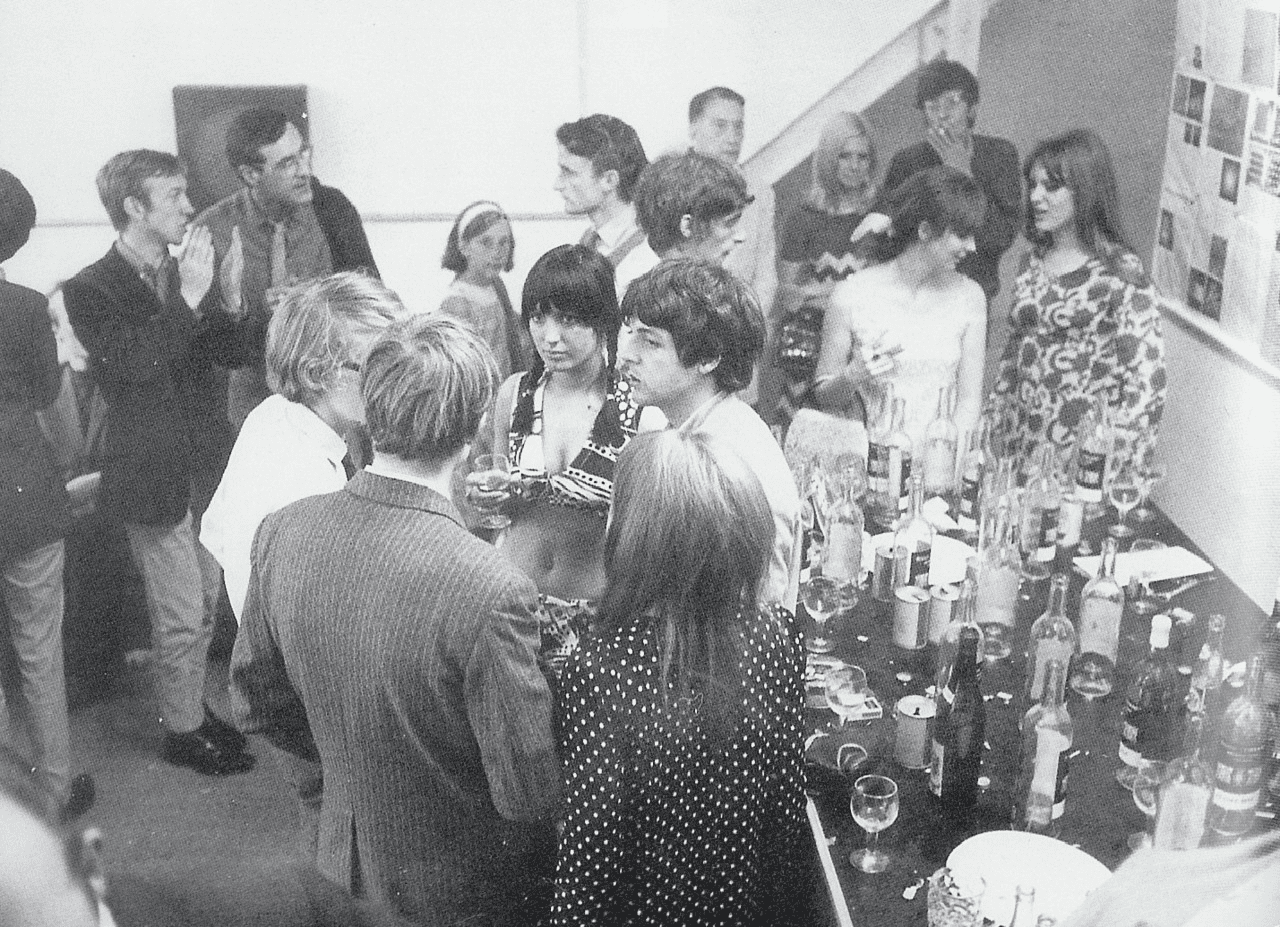
The Paul McCartney Project
Legacy and Significance of Indica Books & Gallery’s Work
Despite its short lifespan, Indica Books & Gallery left a tangible mark on the development of the counterculture. By bringing together avant-garde artists, musicians, and intellectuals, it collaborated with Paul McCartney, John Lennon, Yoko Ono, Pinchas Burstein, Barry Flanagan, and other artists. Its influence was felt long after its closure, and its spirit of freedom, searching for the new, and creative rebellion became a symbol of an entire era.
Barry Miles