
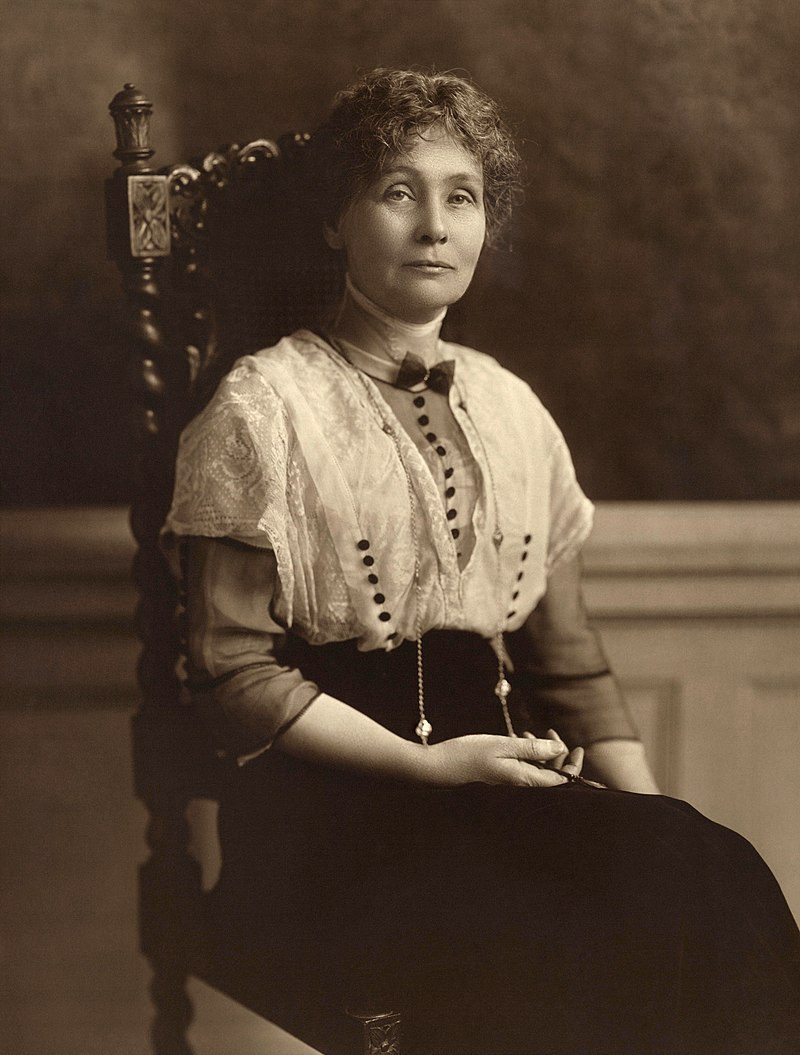
The history of London is rich with women who made significant contributions to the development of the metropolis and the entire nation. We’ll focus on the most famous of these: Emmeline Pankhurst, who dedicated her life to fighting for women’s rights. She became the central figure of the suffragette movement. Read more at ilondon.info.
Emmeline Pankhurst’s activism left a profound mark on history. Her determination and courage changed the perception of a woman’s role in society. In 1999, Time magazine named her one of the 100 most important people of the 20th century, stating that the world was shaken by a new model of life that this woman presented to humanity.
Childhood and Youth
Emmeline Pankhurst was born on 14 July 1858, into a family with politically active parents. From childhood, she was acutely aware of the inequality between men and women, which became the starting point for her lifelong struggle. By the age of 14, she had already joined the movement advocating for women’s suffrage.
In 1879, she married Richard Marsden Pankhurst, a barrister and the author of both the first bill for women’s suffrage in Great Britain in the late 1860s and the Married Women’s Property Acts. Their marriage played a crucial role in Emmeline Pankhurst’s political development, as her husband respected and strongly supported her activism. She went on to found the Women’s Franchise League, which campaigned for the voting rights of both married and unmarried women.
Active Campaigning
In 1903, Pankhurst founded the Women’s Social and Political Union (WSPU)—an organisation dedicated to the goal of achieving votes for women. Their motto was: “Deeds, not Words.” This organisation changed the course of the fight for women’s suffrage, moving from peaceful gatherings to more aggressive, direct action. The group used strikes, pickets, arson, and property damage. They famously smashed the windows of government buildings and disrupted political speeches. Such actions sometimes led to the arrest of the organisers. Pankhurst herself was repeatedly imprisoned, where she undertook hunger strikes as a form of protest.
During World War I, she and her daughter Christabel worked to mobilise women for the war effort. They believed this was an excellent way to prove that women deserved the right to vote. However, Pankhurst’s second daughter, Sylvia, opposed the war and worked to alleviate the suffering of women in the East End.
The Working Years
In 1916, Pankhurst visited North America, touring the US and Canada to raise money and urge the US government to support Great Britain and its allies. She continued to be actively involved in political campaigns, and members of the Women’s Party encouraged her to stand for election. After the war, she continued to promote a nationalistic vision of British unity. In 1918, the government passed the Representation of the People Act, which granted voting rights to women aged 30 and over who met a property qualification. This law was a tremendous victory and an acknowledgement of the work done by Pankhurst and her colleagues.
In 1925, Emmeline Pankhurst returned to London, and a year later, she was selected as the Conservative candidate for a constituency in East London. Unfortunately, her health failed before she could be elected.
Until the end of her life, the political activist continued to work and fight for women’s rights despite her serious health deterioration. She remained in London until her death on 14 June 1928. Just a few weeks prior, Parliament finally passed the law that granted women and men equal voting rights. This was Emmeline Pankhurst’s greatest victory and the day the woman had worked for her entire life. Her example continues to inspire women to fight, to be brave, to stand up for their own interests, and to move forward confidently.