
Modern London is one of the most developed cities in the world. Today, it also boasts high-quality healthcare. The city features not only state-of-the-art hospitals capable of complex surgeries but also centres for traditional medicine. For example, you can find acupuncture and herbal medicine clinics here. Care for mental health has also become widespread and popular. But was this always the case? How were people treated during the Mediaeval period? What differentiated medicine then from what we have today? Read more at ilondon.
Core Treatment Methods and Common Illnesses
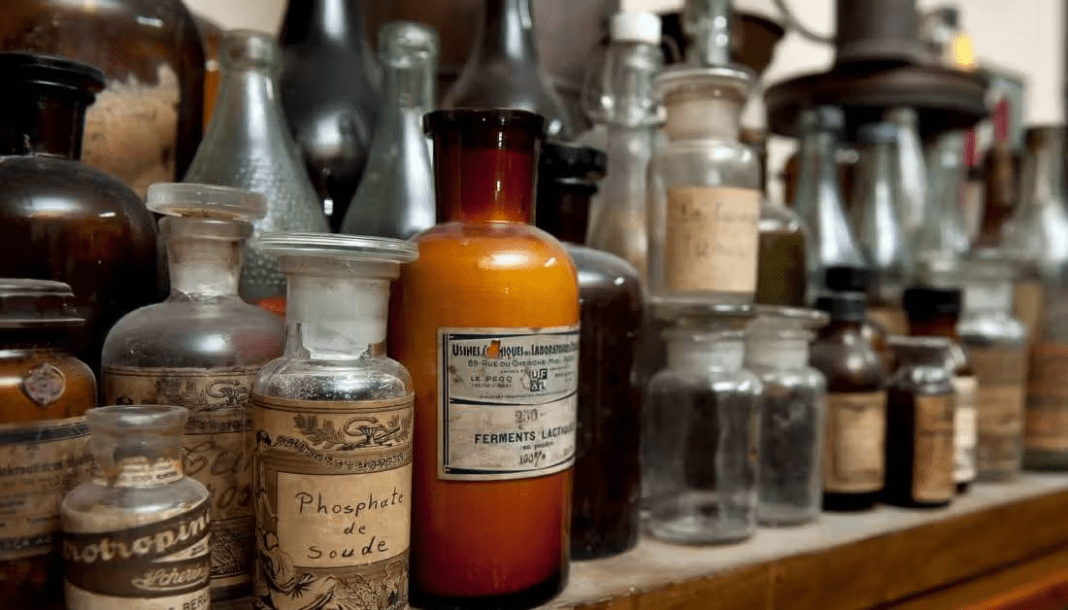
In general, medicine in London and many cities across England during the Mediaeval era was heavily based on ancient ideas and research. This is the source of the main treatment methods. Thus, the concept of the Four Humours—blood, phlegm, yellow bile, and black bile—in the human body was widespread. Doctors of the time (like their Ancient predecessors) believed that an imbalance of these fluids caused illness. Treatment often involved preparing special remedies from herbs. However, drawing inspiration from the ideas of Hippocrates and Galen, most Mediaeval London physicians combated diseases through bloodletting and purging. It was commonly believed that the body needed help to expel anything unnecessary. For instance, bloodletting was performed during fevers, and a runny nose was viewed as the body’s natural way of expelling excess mucus.
One of the main problems was the somewhat flawed understanding doctors had of the human body and the world around it. For a long time, theories regarding microorganisms or the possibility of diseases arising from poor sanitation did not exist. The spread of bacteria and viruses, as well as blood poisoning, was therefore the primary cause of death. The city was constantly ravaged by diseases such as leprosy, scrofula, noma, and others, while outbreaks of the plague claimed thousands of lives every year. The approach to treating women was particularly dire. For example, the history of obstetrics conceals countless facts regarding the mortality of pregnant women, infants, and new mothers, often due to the lack of sterile tools and practices.
The Role of Religion and Legal Norms for Doctors and Surgeons
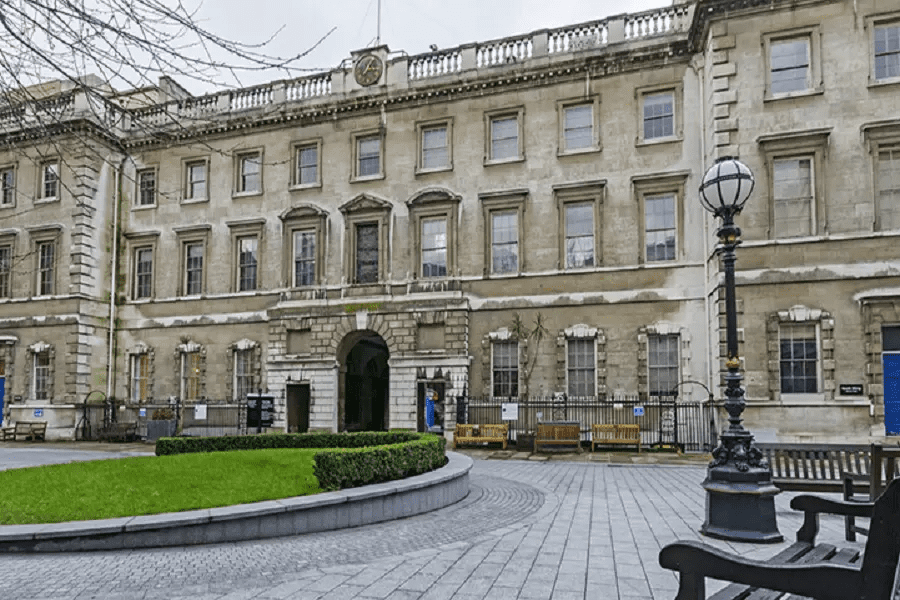
Religion influenced almost all aspects of city life during the Middle Ages. Significant attention was paid to medicine, with most hospitals being established on monastery grounds. These places cared for the sick, regardless of their financial status. Although they often lacked sufficient medicines and appropriate medical equipment, hospitals attached to religious institutions frequently became a lifeline for many people. Here, one could at least find shelter, warmth, and food. St. Bartholomew’s Hospital, founded as early as 1123, remained a constant example. Following the start of the Reformation across England, many of the city’s monasteries were suppressed. A large number of hospitals were forced to close, casting patients onto the streets. However, St. Bartholomew’s Hospital managed to survive all the changes. In 1533, along with Christ’s Hospital, Bethlehem Hospital, Bridewell, and St Thomas’s Hospital, it formed the group of five institutions known as the ‘Royal Group’.
Throughout the Mediaeval period, the activities of physicians, surgeons, and apothecaries long remained largely unregulated and uncontrolled. This situation persisted until the early 16th century. Change finally came in 1512 when Parliament introduced licensing for physicians and surgeons. However, even with this regulation, fundamental medical views did not change for several more centuries. Medicine remained a terrifying prospect for many.