

The birth of a child is usually a planned and long-awaited event in the modern world. More and more European women decide to build a career first and find a reliable partner with whom they want to start a family. Apparently, this view of life is correct because the future child is unlikely to feel the need for anything in such a case. The child will be encircled by mature people, whose moral and financial status is ready to provide a decent education. Therefore, our social media is full of photos of satisfied and happy expectant mothers and it isn’t surprising for modern society. Women have the opportunity to take care of their health. Medicine has reached such a level of development that the process of childbirth has become easier. But has it always been like this? How did women give birth hundreds of years ago? You can learn about this by considering the history of midwifery in London. Learn more at ilondon.
The thing that had nothing to do with men
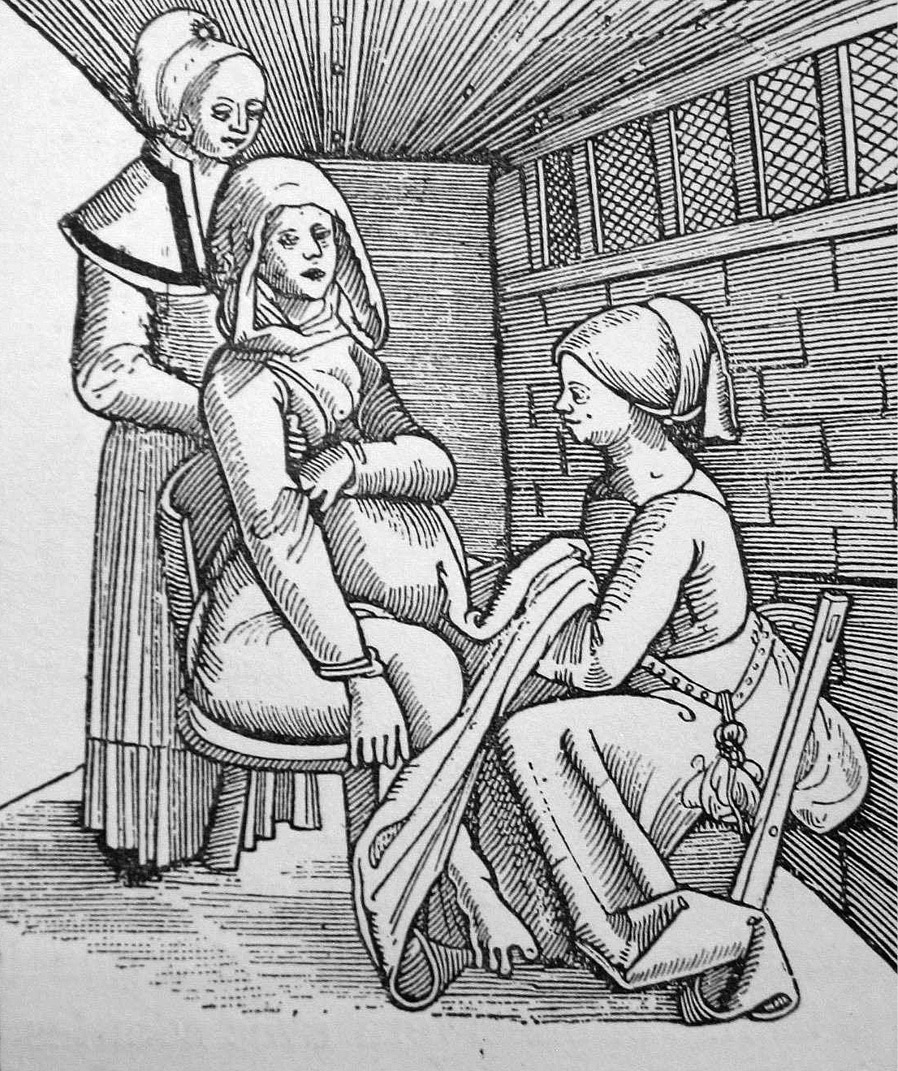
Photo source: Cambridge University Press
In the past, births were attended by midwives as today. However, the very process of giving birth was very different from the modern one. It usually took place at home. Medicine was considered a completely separate branch from midwifery. If, for example, in the 18th century, a surgeon was called an obstetrician, nobody would understand it. Obstetrics wasn’t associated with medical work at all. This was also one of the reasons why childbirth concerned only women. The presence of a man during the process was a very rare phenomenon. Moreover, in that period, the death of a mother or a baby didn’t surprise anyone, on the contrary, it was the norm. Epidemics of plague, cholera and other diseases that engulfed London had long made death a commonplace. Medicine also couldn’t boast of effective methods. Back then, women often died after giving birth from blood contamination because people didn’t foresee the possibility of death from non-compliance with sanitation and hygiene. This happened until the news spread across Europe that the Hungarian obstetrician and gynaecologist Ignaz Philipp Semmelweis required doctors to dip their hands in a solution of chlorine before taking part in birth. However, Londoners started to pay attention to the need for disinfection and the prevention of infections after a series of studies carried out by surgeon Joseph Lister in 1867. Although they related to surgery, the proposed methods of sanitation significantly improved the situation in obstetrics too.
First obstetrical societies
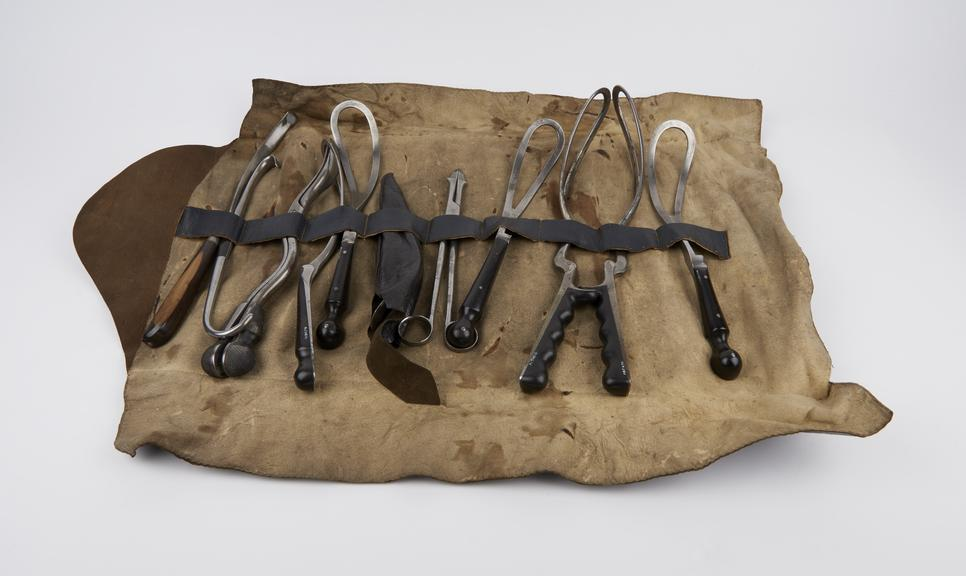
Photo source: Science Museum Group Collection
In the middle of the 19th century, the first organisations aimed at introducing a more professional attitude to childbirth began to emerge. It led to the establishment of the Obstetrical Society of London in 1858. Midwives underwent certification during its existence. Undoubtedly, it didn’t provide normal inpatient care for pregnant women, but such a step meant a transition to a more professional level. The introduction of radical changes took place in about 100 years. In general, the situation with contraceptives wasn’t promising. We can say that they almost didn’t exist. Therefore, there could be about ten children in one family. However, only half of them usually lived to adulthood. The instruments used during childbirth at the end of the 19th century were also terrifying. A standard kit usually consisted of several tongs for grasping the baby’s head, hook tools and obstetric forceps. Surgical instruments were often used if the child was already dead and needed to be removed from the mother’s body. Sometimes, such actions were also resorted to due to certain complications. In other cases, childbirth occurred naturally without surgical intervention.
Improvement of statistics on childbirth mortality
The attitude towards childbirth began to undergo drastic changes at the beginning of the 20th century. People stopped separating midwifery and medicine. The number of births in hospitals has increased. In the 1930s, the process of childbirth became much safer. The number of puerperal fever cases has decreased as well. This was greatly influenced by the invention and distribution of antibiotics. Extraordinary changes took place in the period from 1955 to 1980. The invention of the ultrasound machine made it possible to observe the development of the foetus, measure its size and diagnose twins. Over the years, this technology was improved and acquired more and more functions. At this time, the mortality of both mothers and children during childbirth also drastically decreased. Since the end of the 1960s, the situation with abortions has improved. Until that time, most of them were conducted illegally in terrible conditions. So, due to the introduction of certain control measures, abortions became safer for women’s health. Accordingly, the number of fatalities decreased. Considerable success has been achieved in the development of contraceptives, which allowed people to carry out safe planning. Most couples have become more responsible about the issue. Therefore, not only the birthing process improved, but the future of the children too. They grew up in a family where parents were ready for their appearance. The distribution of various literature for pregnant women also played an important role. Thus, parents-to-be had the opportunity to get to know the process of birth and the peculiarities of raising a baby.

The end of the 20th century was marked by important global decisions in the field of obstetrics and in gynaecology in general. For example, in 1967, after a working visit to France, the English obstetrician and gynaecologist Patrick Steptoe published Laparoscopy in gynaecology. A year later, he presented his research in London. Laparoscopy has become another step towards the development of modern medicine. This method of surgical treatment initially allowed doctors to diagnose endometriosis and other similar diseases. Later, this method became one of the most effective for removing an ectopic pregnancy.
Modern technologies changing the attitude towards childbirth

Nowadays, medicine has undergone such development that the risks associated with death or serious complications during childbirth remain minimal. There is an opportunity to constantly monitor the development of the foetus and prevent difficulties. Epidural anaesthesia allows for relieving pain during childbirth, while modern equipment and methods help to cope with almost any complication. London remains one of the most famous cities in the world for providing obstetric services. The city offers a wide selection of qualified specialists and hospitals. Such medical facilities create the most comfortable conditions for expectant mothers. The wards have showers, comfortable beds, baby changing tables and many other useful devices. Moreover, today, we have a huge number of things that can make the postpartum period easier. These are comfortable hygiene products for mothers and comfortable things for babies. A variety of cocoons, electric chairs, strollers that are more reminiscent of transformers from the movie, developmental mats and interactive toys will definitely make the postpartum period gentle and comfortable.