

London is considered the world centre of football culture. No other city can boast so many professional football clubs and stadiums. Famous world football stars play and train in the city’s stadiums, which aren’t just sports grounds but also historical landmarks. Learn more at ilondon.
London regularly hosts major sporting events. Fans come to the metropolis from all over the world to watch Premier League matches. A trip to London is on a must-do list for every football fan.
Unique stadiums
London is a football city and home to 21 stadiums, which are used by the Big Six of English football. The metropolis has both small local sports venues and world-famous arenas. Wembley Stadium is considered the largest in London and in the whole of Great Britain, as it can accommodate 90,000 spectators. It hosts the country’s most important football events, including finals and international matches.
It is worth noting that each of the city’s districts has its own stadium and is very proud of it. The Emirates Stadium is an example of a modern football venue, but the spirit of the past can be felt at Stamford Bridge. It’s impossible to describe all the stadiums in the city, but it is worth mentioning the most interesting ones. After all, they are the places of great achievements that have inspired more than one generation of Londoners.
Wembley Stadium
The second-largest stadium in Europe is Wembley Stadium. It was opened in 2007 on the site of another stadium, which operated from 1923 to 2003. It was opened by King George V on April 23, 1924. The stadium hosted its first FA Cup final in 1923. Then 200,000 spectators watched Bolton Wanderers beat West Ham United 2-0. However, it had fallen into disrepair in the 21st century and was demolished in 2003. A new stadium was built in its place.
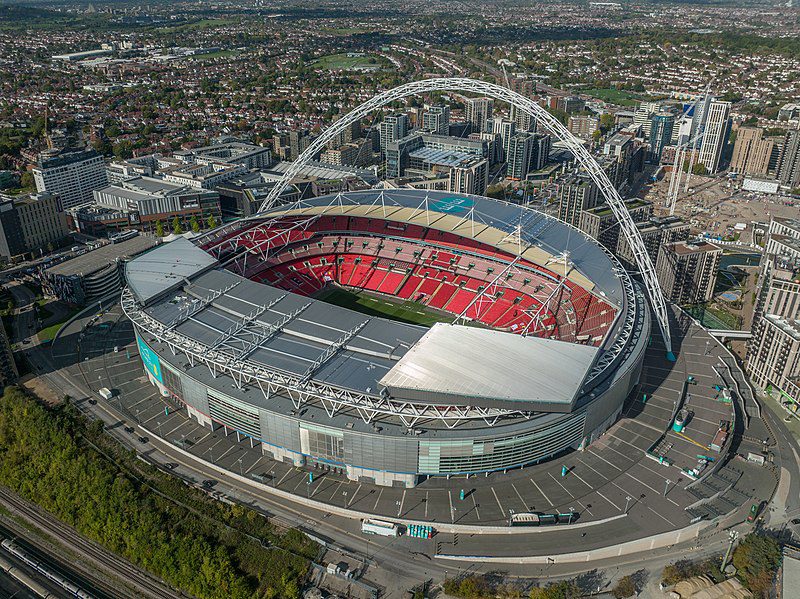
Modern Wembley Stadium is the British national football stadium. It holds most of the national team’s home matches and the FA Cup finals. The stadium was designed by Mott MacDonald, Sinclair Knight Merz and Aurecon engineering companies. The construction process was managed by the Australian Multiplex company. It is one of the most expensive stadiums, costing £798 million in 2007. The venue seats 90,000 people and has a retractable roof to protect spectators from the weather conditions. The stadium’s distinguishing feature is the 133-metre-high arch. It is the longest unsupported roof structure in the world.
In fair weather, the stadium can be seen from anywhere in the city. It is also illuminated during sports and music events. Wembley Stadium hosted the 1948 Olympic Games, the 1996 Euro final and eight 2020 Euro matches, including the women’s 2020 Euro final. The venue also has restrooms and even a license to hold marriage ceremonies.
Stamford Bridge
Stamford Bridge is Chelsea FC’s home ground. It has a long history, dating back to the 1900s. It is one of the most famous football fields in the world. Stamford Bridge has a seating capacity of 40,173 people and is the ninth-largest stadium of the 2024–2025 Premier League season and the 11th-largest football stadium in England. It was opened in 1877 and used by the London Athletic Club until 1905 when the new owner founded Chelsea FC. Since then, Chelsea have played their home games there. At that time, Stamford Bridge consisted of a single covered stand and a large open terrace. The place didn’t experience any changes until 1930, except for the construction of new terraces. The stadium’s highest attendance was recorded in 1935 at a match against Arsenal, which gathered 82,905 fans.
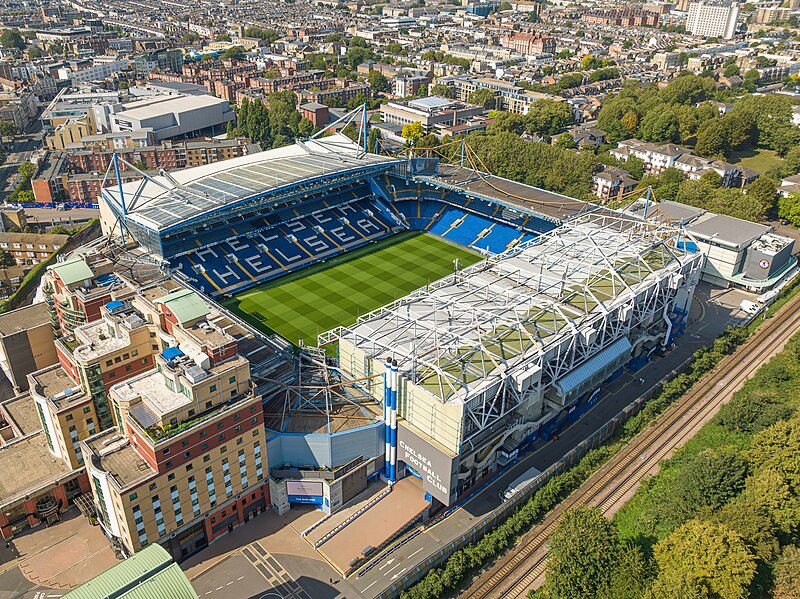
In 1965, the covered West Stand was built at the stadium to replace an existing open terrace. Renovations continued until the mid-1970s when the old main stand was demolished and replaced by the new East Stand. Its construction was costly and Chelsea almost went bankrupt. The site was sold to developers to pay off debts, which almost resulted in FC being evicted and forced to share the ground with Fulham or QPR.
In 1992, the club finally regained ownership, but the stadium needed reconstruction. It began two years later with the demolition of the North terraces, which were replaced by a new seating stand. Other terraces were also rebuilt. The reconstruction of the West Stand began in 1997 and was completed in 2001. Expanding the ground was difficult, as it was surrounded by residential buildings. Plans for a new stadium were announced in 2015. On 5 January 2014, Hammersmith and Fulham Council approved the redevelopment. The nearby Chelsea Village complex houses a club shop, museum, bar, restaurant, hotel, cafes and spa. The Mayor of London, Sadiq Khan, has given full permission for the stadium redevelopment.
However, on 31 May 2018, the club announced that the renovation project had been suspended due to the unfavourable investment climate. In 2022, Todd Boehly, the club’s new owner, appointed architect Janet Marie Smith to oversee the renovation of the stadium. In the summer of 2023, it was announced that Chelsea had reached an agreement to purchase a new site for the renovation.
The Emirates Stadium
The Emirates Stadium is known for its ultra-modern design. Its construction began in 2004 and was completed in 2006. It is the home ground of Arsenal FC, with a seating capacity of 60,000 football fans.
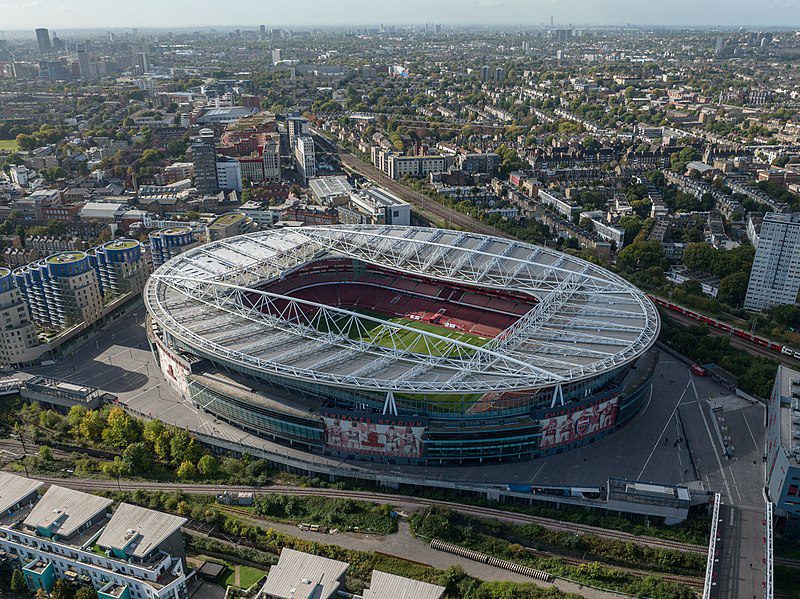
The stadium is considered the fifth-largest football stadium in the UK. The Emirates Stadium is more than just a football ground, it is part of Arsenal’s historic past. The stadium has many amenities that help improve the mood of fans, including a restaurant, a shop and a museum. The venue hosts not only football matches but also musical events.
Fans know that it’s not recommended to drive to the stadium before an important match, as there are strict parking restrictions. For those who have tickets, the stadium opens two hours before the start of the match and visitors can buy souvenirs or delicious food.
Tottenham Hotspur Stadium
The newest and most modern stadium in London opened in 2019 is Tottenham Hotspur Stadium. The venue can accommodate 62,850 spectators. It stands out from other stadiums with its beautiful design and a retractable pitch, which allows it to be used for various events. The stadium was designed to be as comfortable as possible for fans as well as bring them closer to the field. Thus, the distance from the first row to the side line is 4.9-7.9 metres. The single-tier South Stand with 17,500 seats is the largest in the UK and reaches over 34 metres in height. It is decorated with the famous golden cockerel at the top.

Fans are also offered 60 local catering establishments, which are very popular among guests. Another attraction is the South Stand’s Market Place with the longest bar in Europe, The Goal Line Bar.
The stadium is used for many purposes due to its unique pitch. It hosts boxing, rugby and concerts and all of this is an additional source of income for the club.
So, London is an interesting city not only in terms of beautiful architecture or memorable places but also because of its great sports history. Many famous football players and other athletes were raised in the city’s stadiums.