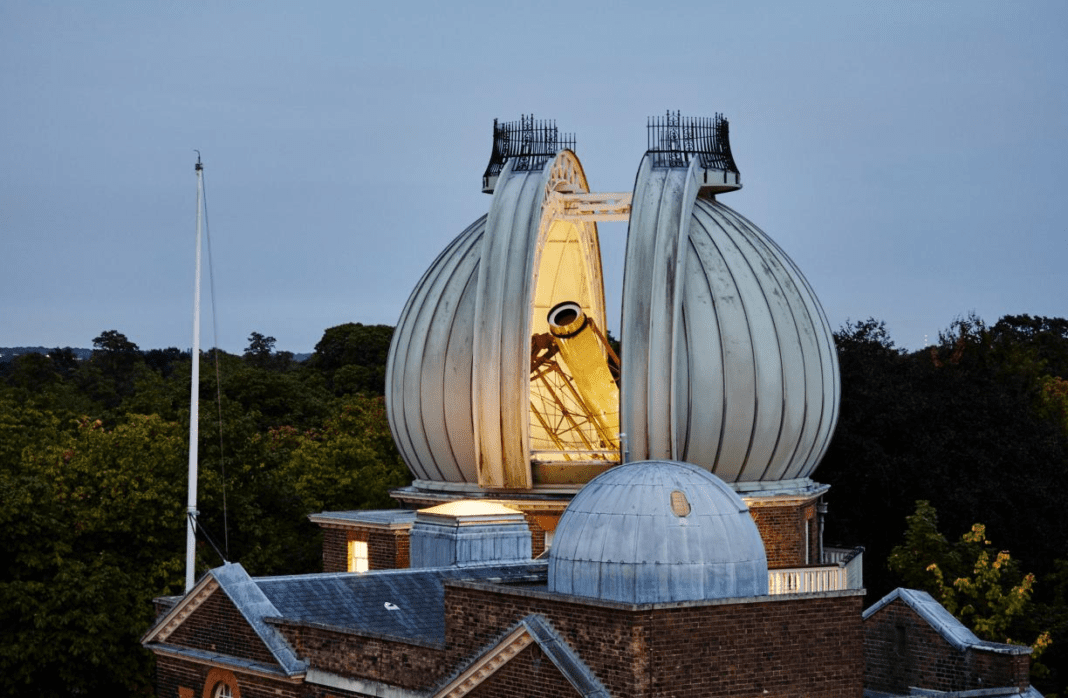

The Royal Greenwich Observatory is one of the most interesting objects in London. It used to play a very important role in determining the coordinates, and nowadays, it is a location with a unique history. This place still attracts both ordinary tourists and famous scientists. The observatory is known throughout the world and is the main publicly funded astronomical organisation in the whole of Great Britain. So, what exactly are the walls of the observatory hiding and what facts can really surprise you? Learn more at ilondon.
History of creation
The observatory’s history began in a rather unique place. Greenwich Castle became the location of the first purpose-built scientific research institution in Great Britain. They say in London that Henry VIII’s mistresses lived in this castle many years ago. So, it could have been a story of passionate love, but fate decided to connect this place with science. If we don’t take into account such legends, we can make one single logical conclusion about such a location. Greenwich Castle was chosen only because it was located on a large plot of land that belonged to the royal family. Obviously, it was better to choose that option than to buy a new lot.
So, the Royal Greenwich Observatory was founded by King Charles II in 1675. The main initiator of building such an object was the English mathematician and surveyor Jonas Moore. He played an important role in the creation of the observatory. Moore provided necessary tools during the construction process and also donated two clocks of unusual design. Thus, the first equipment for conducting scientific research was collected. At first, only the royal astronomer, his assistant and his family lived in the observatory. But later, the location became more popular. The number of responsibilities also increased. Therefore, over the years, more and more personnel appeared in the observatory.
Observatory’s importance
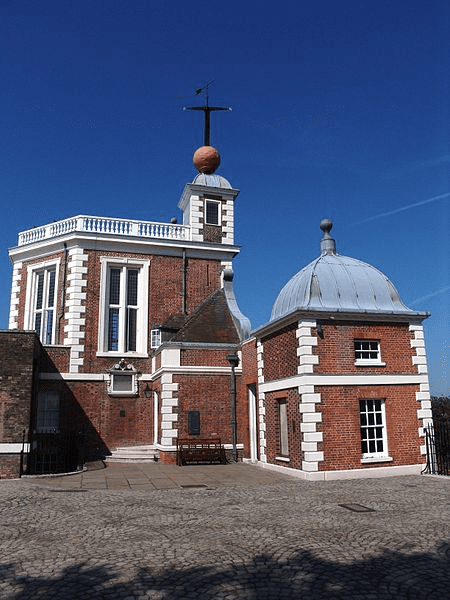
The main goal of the Royal Greenwich Observatory was to find coordinates that were extremely important for navigators. Subsequently, the usual duties of the personnel included conducting meteorological observations, carrying out magnetic surveys, advising the government on technical issues and conducting spectroscopy. Also, the facility became a service for accurate time determination. Later, scientists experimented with astrophotography. At different times, many studies were conducted here. For example, one of the most interesting events was the observation of the Mercury transit in 1832. The observatory’s telescope was used for that. Moreover, scientists determined the diameter of the planet and investigated unique optical effects here.
Scientific fund
Star catalogues that make up a significant part of the observatory’s fund are some of the most popular in the world. The catalogue of the Danish astronomer Tycho Brahe is among them. It contained about 1000 stars but wasn’t accurate. Therefore, the question of developing new star charts arose. Astronomer James Bradley managed to do that. From 1750 to 1762, he catalogued more than 60,000 stars. His works were so accurate that they served as the main research tool for several centuries in a row. They were used even in the 1940s.
Observatory today
The modern Royal Greenwich Observatory in London is a museum. In the 20th century, it was decided to transfer the main bodies of the observatory to other places in England, as well as to open various branches throughout the country. Therefore, nowadays, the original building attracts mainly tourists who want to get acquainted with its amazing history.