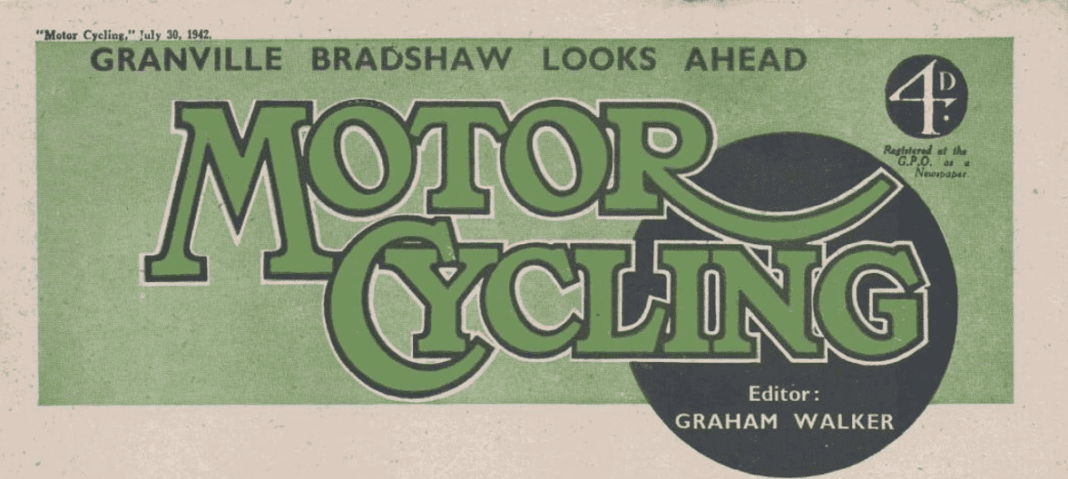

The Motor Cycling magazine is regarded as the pioneer of the British motorcycle press. Its technical articles, detailed race reviews, and unique advertisements became an indispensable source of information for generations of two-wheeled enthusiasts. Read more at ilondon.
History of the Founding and Development of Motor Cycling Magazine
The Temple Press publishing house founded Motor Cycling magazine in 1902. Publication ceased after just a few months but was successfully relaunched in 1909. At that time, The Motor Cycle magazine had already firmly established itself in the motorcycle periodical market, having been published for six years and cultivated a strong audience. The two publications soon became rivals due to their differing approaches to covering topical events.
Motor Cycling carved out its niche by focusing on coverage of races and competitions. As a weekly publication, it faced certain limitations regarding print quality. Content was printed on inexpensive paper, and colour photographs were a rarity due to the high costs. Despite these drawbacks, the magazine impressed readers with the quality and depth of its technical articles. Some of this content came directly from motorcycle manufacturers who used its pages as a platform to promote their products.
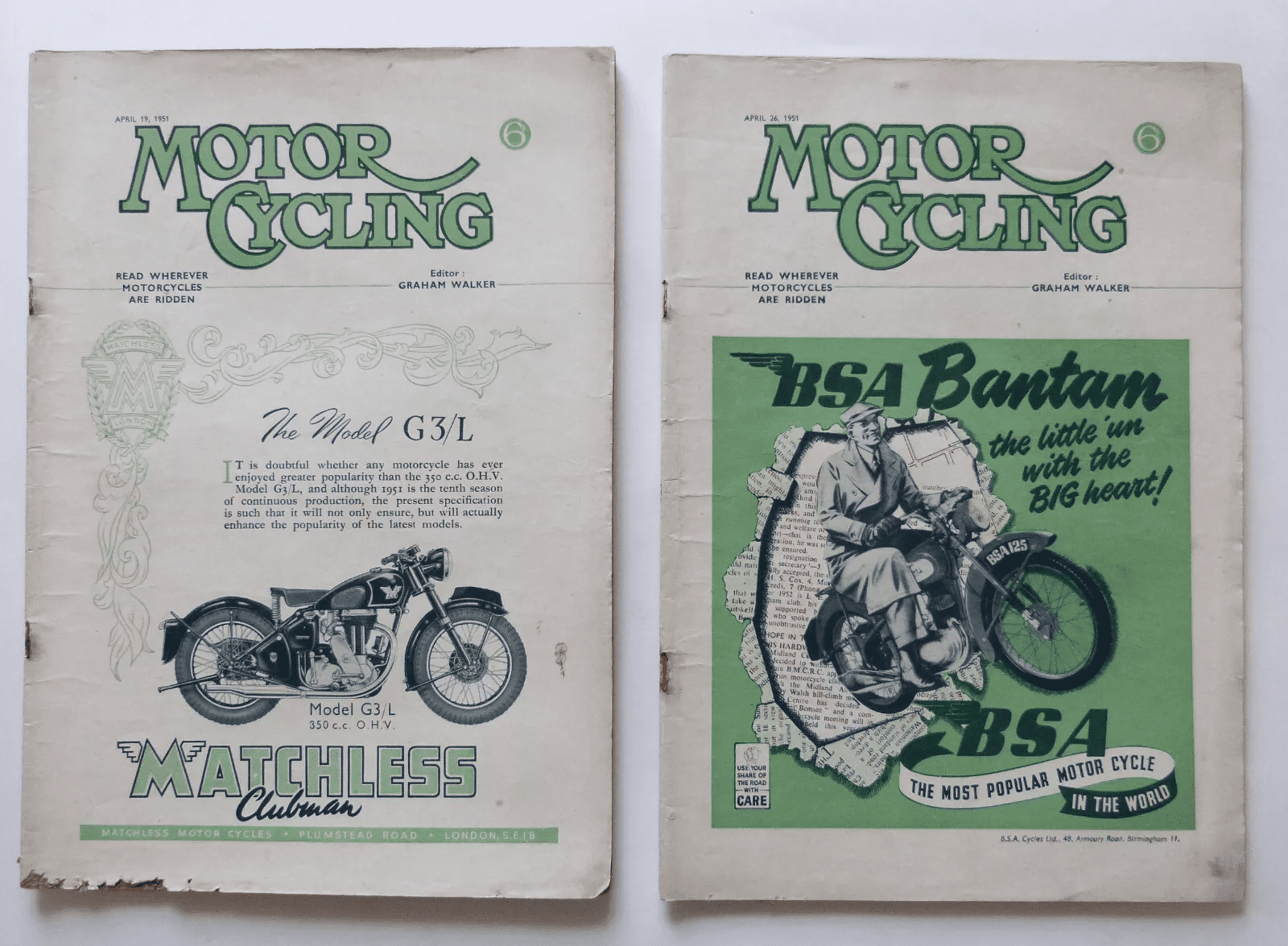
In 1938, Graham Walker became the editor of Motor Cycling. He had been a dispatch rider in World War I and had a successful racing career with the Rudge, Sunbeam, and Norton teams. The new editor’s experience gave him a profound understanding of the technical aspects of the motorcycle industry and the needs of enthusiasts. Thanks to him, the magazine’s green cover became its calling card, associated with the slogan: “Read Wherever Motor Cycles Ride!”
The commercial side of Motor Cycling was no less important than its editorial content. Its true essence lay in the huge classified section, dedicated to the sale of used motorcycles and various accessories for riders. Besides the expected spare parts, the magazine’s pages featured a wide range of specialised clothing. Offerings included RAF aviator goggles, American bombers, and Dispatch Rider boots, which were used by communication couriers during World War II.
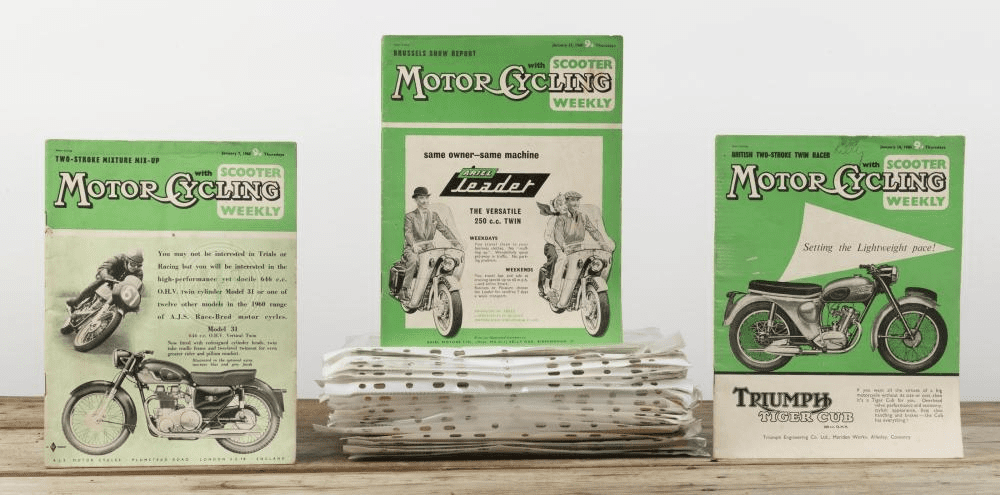
In 1959, Motor Cycling changed its name to Motor Cycling with Scooter Weekly. This addition was intentional and reflected the growing popularity of scooters in post-war Europe. However, more radical changes occurred in 1962 when the publication shifted to a newspaper format. This allowed for reduced production time and lower printing costs.
The culmination of this period of transformation was the merger of Motor Cycling with its long-time competitor, The Motor Cycle, in 1967. Chief editor Harry Louis underscored the significance of this event, highlighting two key aspects: the union of editorial talent and technological renewal. The plan was for the new Motor Cycle to offer readers all the familiar content, supplemented by expanded coverage of sporting events and industry news. Ultimately, the “Motor Cycling” part was entirely dropped from the combined publication’s title.
eBay
The Legacy and Significance of Motor Cycling Magazine
Motor Cycling was the first British motorcycle magazine that laid the groundwork for the future development of periodicals about two-wheeled transport. Prominent sports editors, including Mick Woollett, Bruce Main-Smith, and Cyril Quantrill, worked on its development. Together, they not only informed readers about the freshest events in the world of motorcycles but also actively promoted the industry’s growth. The publication served as a platform for promoting leading motorcycle brands such as Ariel, Royal Enfield, and Firestone.
 Auctions – Donington Auctions