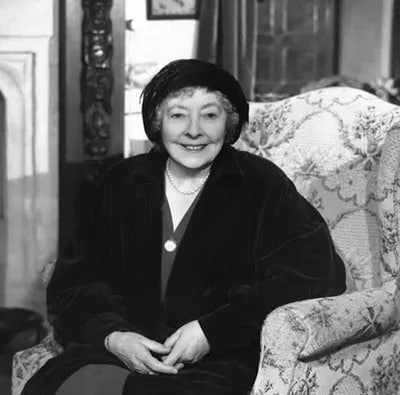

Dorothy Kerin is considered one of the most remarkable spiritual figures of the 20th-century Christian world—an Anglican visionary and healer. Drawing on her personal experience of mental and physical suffering, she turned it to the benefit of others. In this way, she offered not only the healing of ailments but also the restoration of faith, hope, and inner peace. Read more at ilondon.
Dorothy Kerin’s Early Years and Spiritual Path
Dorothy Kerin was born on 28 November 1889 in Walworth, London. From early childhood, she was cheerful, energetic, and active, but at the age of 17, her health suddenly deteriorated. She contracted diphtheria, which led to complications including pneumonia, pleurisy, a stomach ulcer, diabetes, and eventually tuberculosis. Exhausted by this series of severe illnesses, she became bedridden, and her condition grew critical.
At the age of 22, after prolonged suffering, Dorothy Kerin’s life was dramatically changed. While lying in bed receiving Holy Communion, she experienced a profound spiritual revelation. After the rite was completed, she fell into a semi-conscious state, during which she saw angels beside her. One of them spoke words that would change her life forever: “Dorothy, your suffering is over. Get up and walk.” In that instant, an unknown power filled her healed body. This profound mystical encounter with the transcendent world ignited in her a passion to serve other people.
From 1915, Dorothy Kerin began a period of spiritual mentorship under the guidance of Richard Langford-James, the vicar of St Mark’s Church in Bush Hill Park. She lived at the vicarage, even through the bombing of London during the First World War, continuing her path of prayer, service, and deep spiritual reflection. During this time, in an atmosphere of mystical presence, the marks of Christ’s wounds (stigmata) began to appear on her hands, feet, and side. Thus, she became one of the few documented Anglican stigmatists.
In 1929, Dorothy Kerin left Bush Hill Park and opened her first home of healing in Ealing. She described it as a place “to strengthen the weak hands and the feeble knees of many suffering souls.” The building required significant renovation, including repairs, remodelling, and furnishing. Donations, offers of help, and loans of furniture began to arrive from well-wishers. When the home opened its doors, it was almost immediately filled with those seeking physical and spiritual healing.
In 1948, Dorothy Kerin founded her final and most famous home of healing—Burrswood Christian Hospital. It gained widespread recognition for its holistic approach to patient recovery. Here, medical science and spiritual support were combined, and people could receive help for body, mind, and spirit. The hospital became the embodiment of its founder’s vision of a harmonious coexistence between medicine and Christian love.
At Christmas 1962, Dorothy Kerin’s health deteriorated. On 24 January 1963, she lost consciousness, and on the morning of 26 January, she passed away. She left neither a will nor a trust deed for her nine adopted children. A week after her death, Bishop Cuthbert Bardsley wrote in *The Times* newspaper: “At the centre of this dynamic work at Burrswood was a frail, gifted and inspired woman, Dorothy Kerin.”
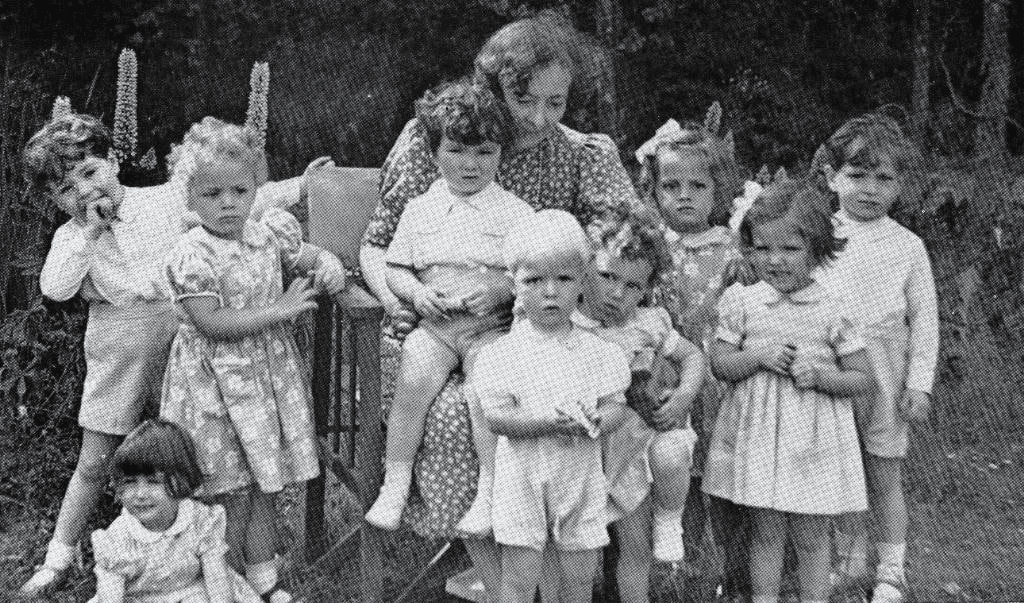
Dorothy Kerin and her adopted family
The Recognition and Significance of Dorothy Kerin’s Spiritual Healing
Filled with mystical experiences, extraordinary faith, and sacrificial service, Dorothy Kerin’s life left a profound mark on the spiritual history of Great Britain. Within the Anglican tradition, she became a pioneer of a renewed healing ministry, serving as a spiritual mentor and visionary. By establishing her homes of healing, she laid the foundation for a new vision of healthcare, where medical treatment is combined with spiritual care. Through the Dorothy Kerin Trust and Burrswood, her pioneering vision continues to influence the modern understanding of holistic care.
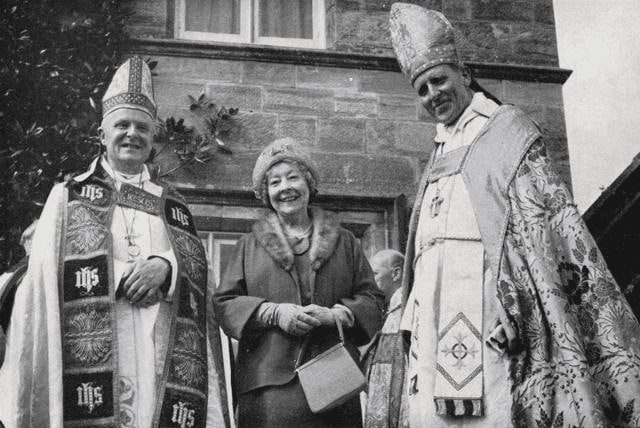
The Bishop of Rochester, Dorothy Kerin, and the Bishop of Coventry