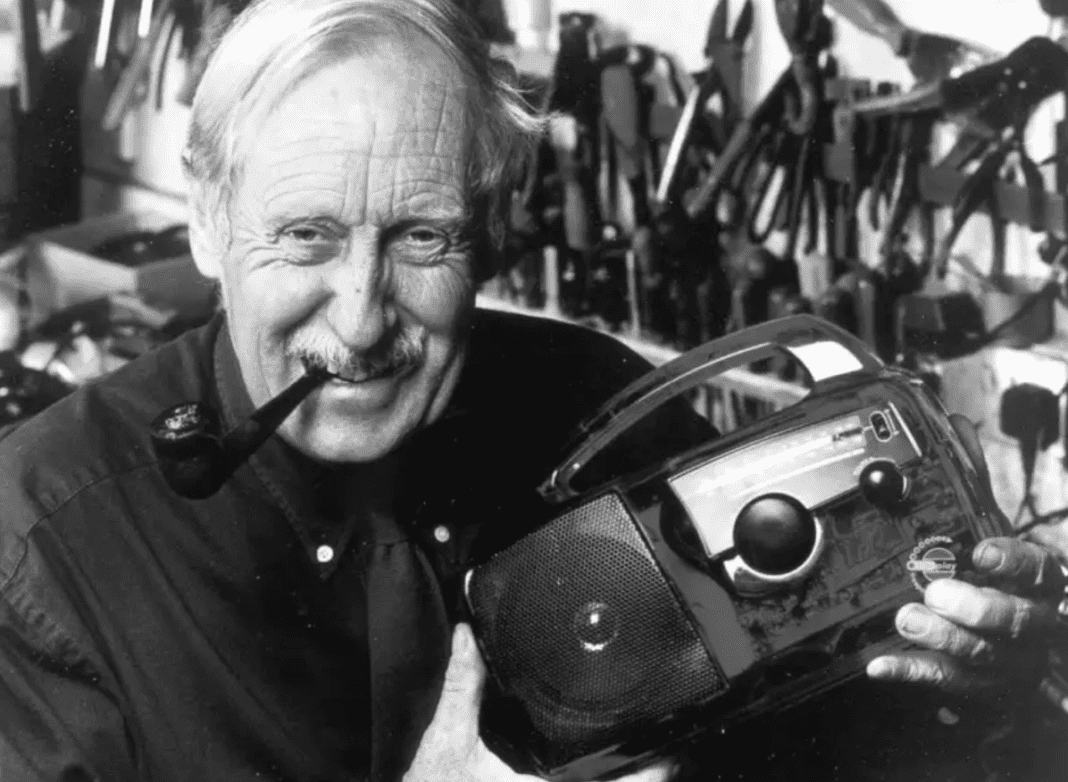

In the mid-20th century, the mass outbreak of AIDS became a critical public health issue in Africa. Trevor Baylis—an English inventor—played a vital role in the medical education of the continent’s people. By creating a device operational in conditions without electricity, he provided millions of people with access to life-saving information. Read more at ilondon.
Trevor Baylis’s Early Years and Inventive Path
Trevor Graham Baylis was born on 13 May 1937, in London. His mother, Gladys Jane Brown, was an artist, and his father, Cecil Archibald Walter Baylis, was an engineer. Although World War II interrupted his early formal education, he demonstrated an early aptitude for water sports. Thanks to his high performance in swimming, he represented Great Britain, narrowly missing out on the 1956 Summer Olympics. In 1959, he took up a position as a physical training instructor in the Royal Sussex Regiment, where he swam for the Army and the Imperial Service.
Growing up in Southall, Trevor Baylis began his scientific work at the local soil mechanics laboratory. Concurrently, he studied mechanical and structural engineering at a nearby technical college. In 1961, the young man was employed by Purley Pools, where he was first responsible for sales and later for research and development. He later founded one company for water displays and another for metal swimming pools. Shotline Steel Swimming Pools supplied pools to schools across the country for decades.
In the 1960s, Trevor Baylis worked as a stuntman for television programmes, showcasing his skill in shows like the Berlin Circus. Observing the career decline of his injured colleagues, he decided to develop specialised products for people with disabilities called Orange Aids. In the late 1980s, the expert turned his attention to the spread of AIDS in Africa. He believed the best way to tackle this problem was to create a clockwork radio to disseminate educational and timely information in areas without electricity.
After assembling the prototype of his most famous invention in just half an hour, Trevor Baylis finalised the design and filed his first patent in 1992. Although the initial model—which featured a small transistor radio receiver, an electric motor, and a clockwork mechanism—functioned well, the inventor sought a partner for scaled-up manufacturing. In 1994, the prototype was featured on the BBC television programme “Tomorrow’s World”, attracting investor attention. As a result, financial contributions allowed him to found the company Freeplay Energy, which specialised in electrical and electronic products. In 1996, the clockwork radio was honoured with the BBC Design Award for Best Product and Design.
Facing financial difficulties, Trevor Baylis established a fund to promote invention by encouraging young talent. However, he later found himself in relative poverty after losing legal control over his product, which generated little money for him. Towards the end of his life, the inventor suffered from Crohn’s disease, with no immediate relatives nearby. He died on 5 March 2018, in London.
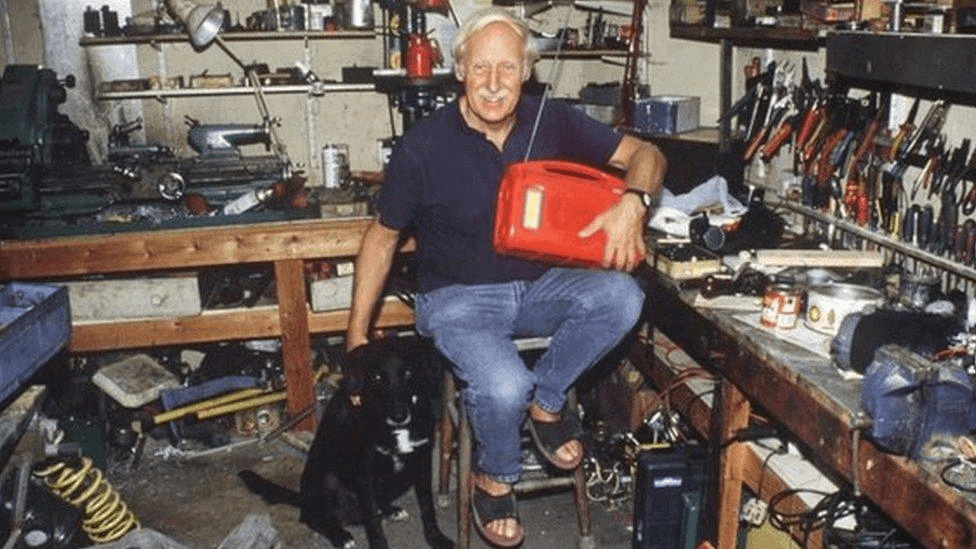
BBC
Recognition and Significance of Trevor Baylis’s Work for Great Britain
Trevor Baylis was actively involved in the development of computing and telecommunications in Great Britain. Addressing acute social problems, he focused on overcoming the difficulties faced by adapting sports veterans and the issue of medical illiteracy among Africans. For his work, the inventor was awarded the Order of the British Empire (OBE) and 11 honorary degrees from universities across the country.

BBC