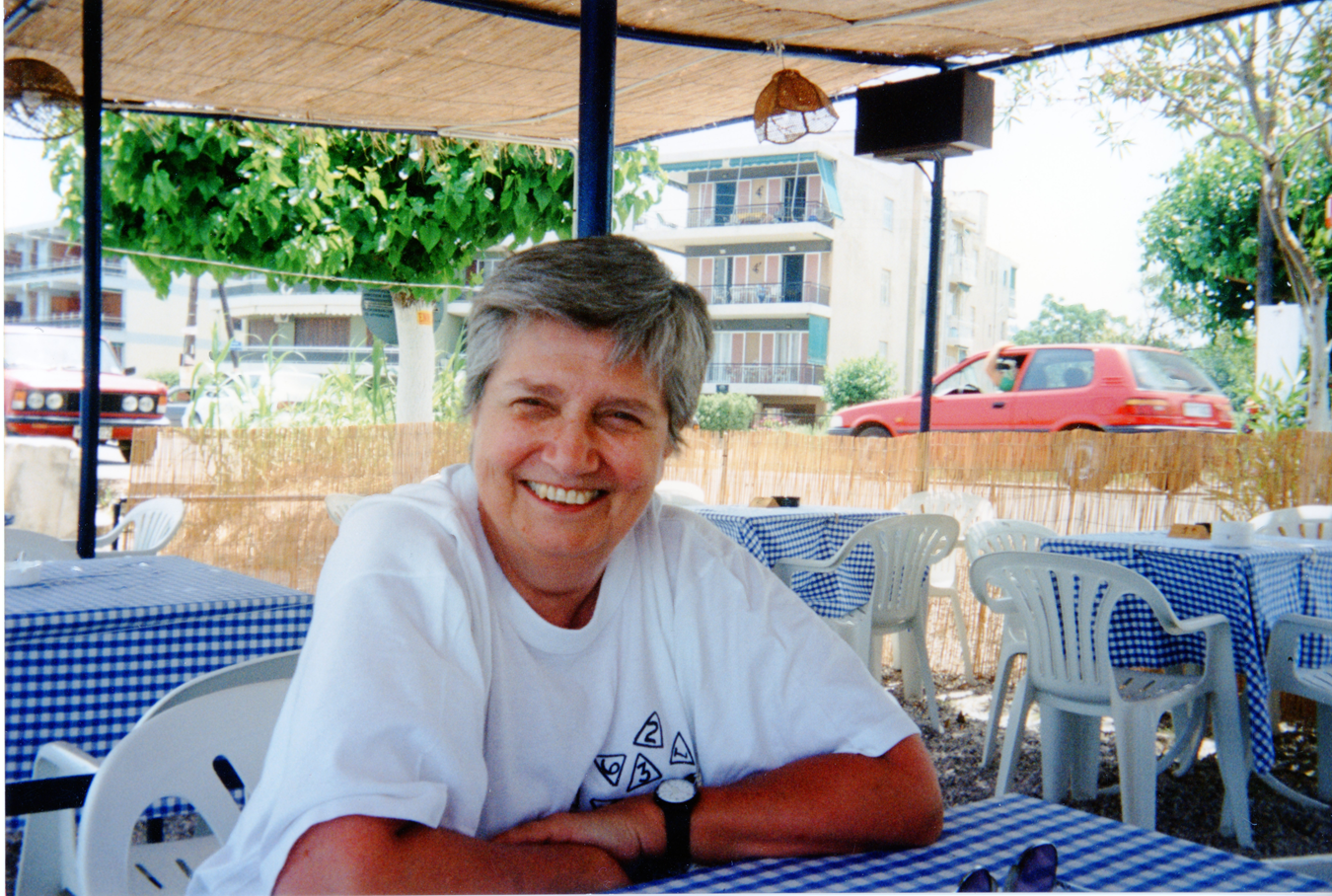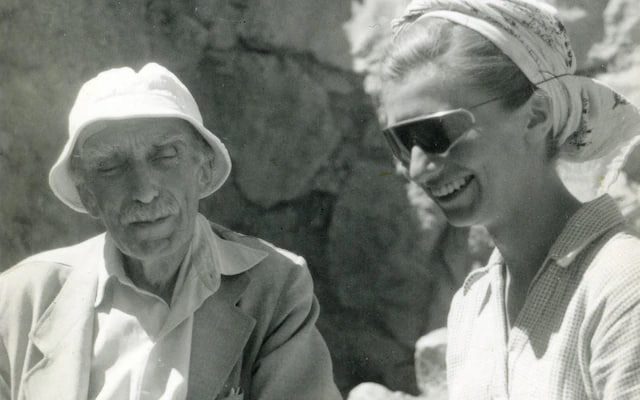

Elizabeth French was a leading authority on the prehistoric Aegean who made an invaluable contribution to the study of Mycenae. For nearly seven decades, she seamlessly combined fieldwork, analytical scholarship, and teaching. Crucially, she developed the fundamental classifications of Mycenaean pottery and terracotta figurines that remain the definitive reference points for archaeologists globally. Read more on ilondon.
Elizabeth French’s Early Life and Archaeological Journey
Born Elizabeth Bayard Wace on 19 January 1931 in London, Elizabeth French came from an eminent archaeological background; her parents were Alan Wace and Helen Wace. At the age of eight, she first participated in her father’s excavations at Mycenae. Following this, the family remained in Athens, where the young girl attended the British Council School. In 1940, she travelled with her mother to the USA, and four years later, she rejoined her father in Alexandria, where he had taken up a professorship in Classics and Archaeology at the local university. After the Second World War, they all returned to the UK in 1946, and the budding researcher completed her secondary education at Cheltenham Ladies’ College.
From 1949 to 1952, Elizabeth French studied Classics at Newnham College, Cambridge, where she was awarded the prestigious Mathilde Blind Scholarship. Even during her university holidays, she returned to Greece to participate in excavations under her father’s direction. She later continued her studies at the Institute of Archaeology in London, specialising in the conservation of ancient monuments. Simultaneously, she began her teaching career at the Royal Masonic School for Girls in Rickmansworth.
Following her father’s death, Elizabeth French continued his work, collaborating with William Taylor and the Archaeological Society of Athens from 1959 to 1969. Throughout the 1970s and 1980s, she actively supported the preparation of his academic publications dedicated to the south-west part of the Mycenaean citadel. Their joint efforts culminated in the multi-volume series, Well Built Mycenae, which she launched with Kenneth Wardle in 1981. The materials were initially supported by microfilm, and later by CD-ROMs and DVDs, ensuring the preservation and dissemination of the scholarly data in modern formats.
In 1976, Elizabeth French took up the headship of Ashburne Hall, a hall of residence at the University of Manchester. She was also actively involved in the academic process as an Honorary Lecturer in the Archaeology Department, sharing her invaluable fieldwork expertise with younger scholars. In 1989, she became the first female Director of the British School at Athens (BSA), one of the most prestigious research centres for classical archaeology. During her five years at the helm, she strengthened the School’s international ties, supported young researchers, and contributed to the preservation of Greece’s archaeological heritage. Following this, she returned to Cambridge, where she continued her academic career, lecturing on Mycenaean pottery in the Faculty of Classics.
In 2013, Elizabeth French donated the archive of documents and records from the British excavations at Mycenae (1920–1969), along with her personal academic archive, to the University of Cambridge. As a result, the collections were digitised and made publicly accessible. She remained active in academic circles until the end of her life, supporting colleagues, reviewing work, and advising young archaeologists. She passed away on 10 June 2021 in Cambridge.
Recognition and the Significance of Elizabeth French’s Research
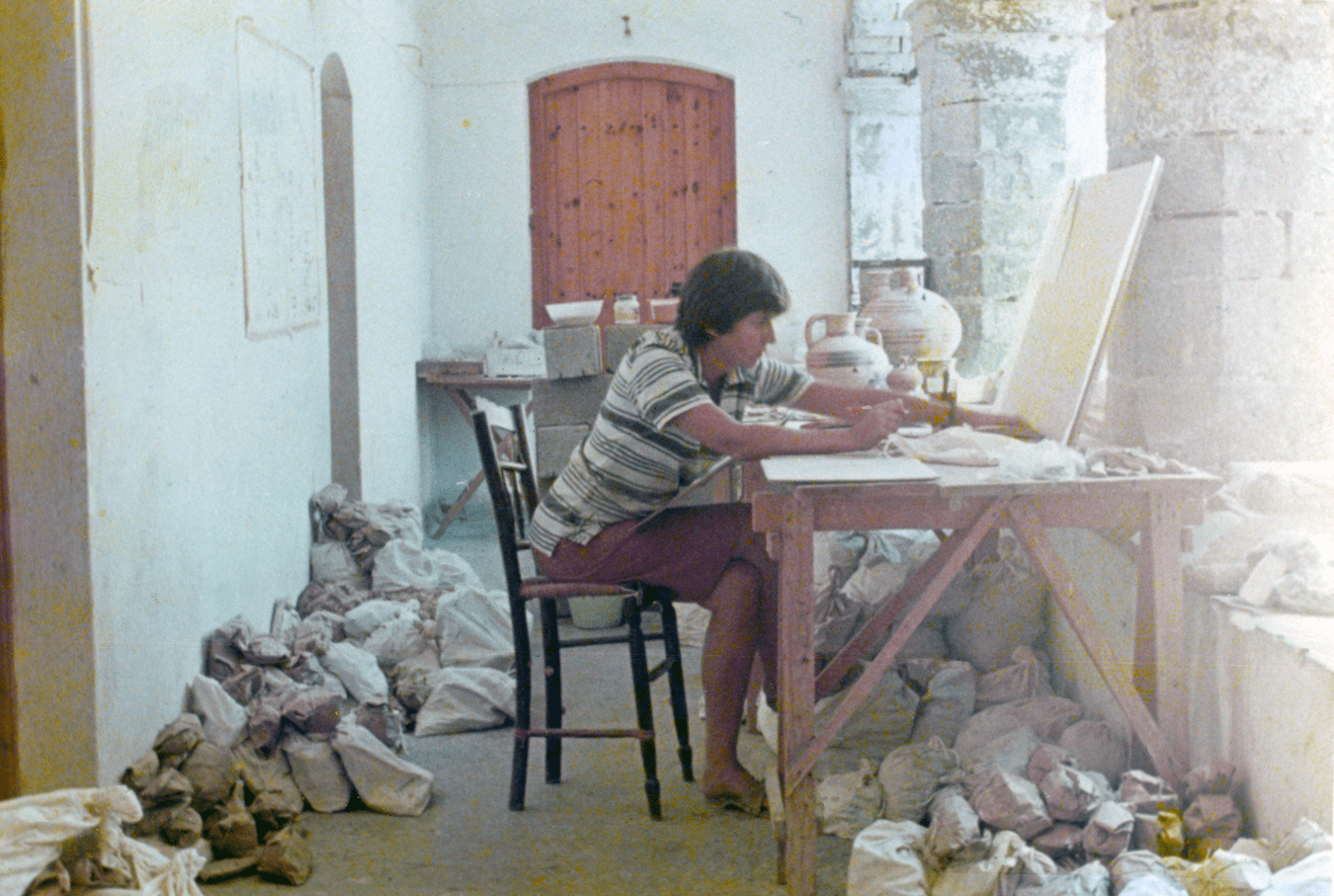
Elizabeth French holds a unique position in the history of archaeology as one of the most influential researchers of the prehistoric Aegean world. She became the world’s leading expert on Mycenaean ceramics, pottery, and terracotta figurines. She didn’t just catalogue thousands of artefacts; she also created detailed stratigraphic and contextual frameworks that made it possible to establish an accurate chronology for the development of Mycenaean art and material culture. Her scholarly authority was ultimately recognised by the international community: she was elected a Fellow of the Society of Antiquaries in 1979, and in 2004, the University of Athens awarded her an Honorary Doctorate.