

There were many outstanding and world-known scientists in London. Each of them had their own story. Someone devoted their whole life to scientific achievements but never paid enough attention to children. Others, on the contrary, managed to successfully combine professional and personal spheres. Life is actually very strange and unpredictable. The fate of the British physicist Frank Nabarro was just like that. He was engaged not only in scientific research but also had experience in conducting hostilities and spent a large part of his life in the Republic of South Africa. What else do we know about the scientist’s life path? Learn more at ilondon.
Childhood, education and the first steps in professional activity
Frank Nabarro was born in London on March 7, 1916. His family were the descendants of the Western Sephardim (an ethnographic group of the Jewish people). It is also proved by the name and surname of the scientist. As a child, he and his family moved a lot, so the boy had to change several schools. One of them was Nottingham High School, where Frank paid great attention to physics and chemistry. At this educational institution, he met a physics teacher who played an important role in his further interest in this subject. After entering the New College in Oxford, Frank Nabarro finally realised that his strong point was theoretical analysis and thinking. Therefore, he continued to diligently study exact sciences. Later, he received an unparalleled result, three diplomas with honours (in 1935, 1937 and 1938). One of them was in physics and two others in mathematics. A new move in the life of a scientist led him to the University of Bristol, where he got a bachelor’s degree and at the end of the Second World War got a coveted master’s degree. During the war, Frank participated in the anti-aircraft defence of London. He joined the Army Operational Research Group and worked in it throughout the war. Thus, the first steps in the scientist’s professional activity were marked by hostilities and chaos that reigned throughout the world.
Scientific studies and awards
Frank Nabarro conducted the first important research at the University of Bristol. Under the guidance of one of the most famous professors in the country, he studied the phenomenon of the flow stresses of alloys. In fact, it was the second attempt at scientific research because initially, the scientist was interested in the interaction of the walls of magnetic domains. However, the scientist soon discovered that a similar question had already been considered by a group of researchers from Germany. Thanks to his scientific work on flow stress, Frank received a bachelor’s degree. Later, the scientist studied metallurgy at the University of Birmingham. In 1953, he was awarded a D.Sc. at the same educational institution.
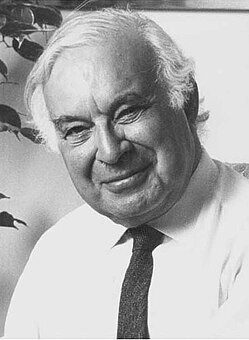
In general, 1953 was rich in significant events for the physicist. He was offered a job at the University of the Witwatersrand, which was located in one of the cities of South Africa. Frank Nabarro’s activities turned the physics department into one of the most influential in the country, as well as made it a leader in the field of metallurgical research. During that period, the scientist paid great attention to the problem of racism in the world. He was a staunch opponent of apartheid (a policy of racial discrimination). Therefore, after it was officially abolished, he did a lot of things to help many Africans get higher education. In addition to conducting scientific research, Frank Nabarro has also published several books. In 1971, he was elected a Fellow of the Royal Society. His awards include the De Beers Gold Medal, J F W Herschel Medal, AIME R F Mehl Award and many others.